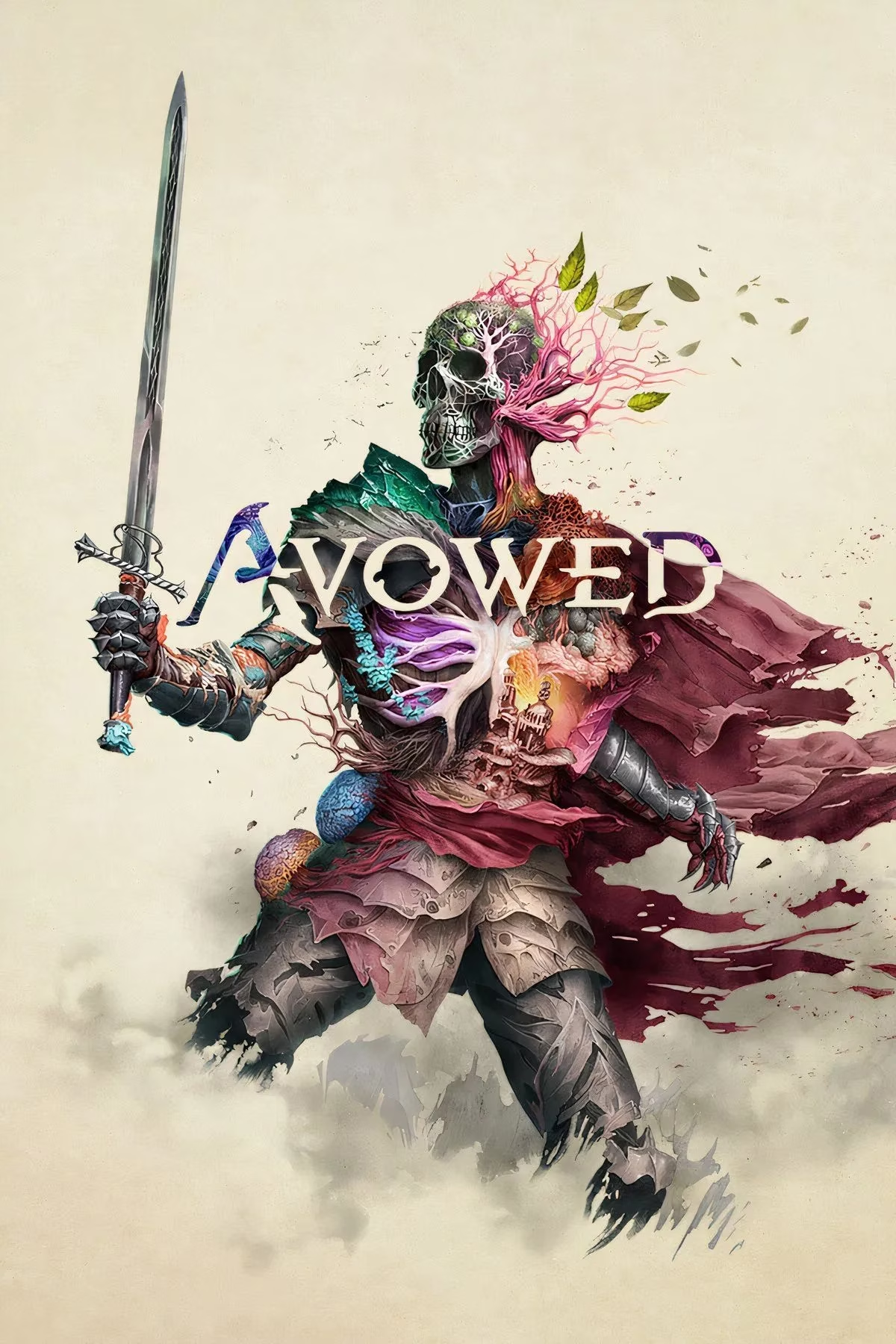
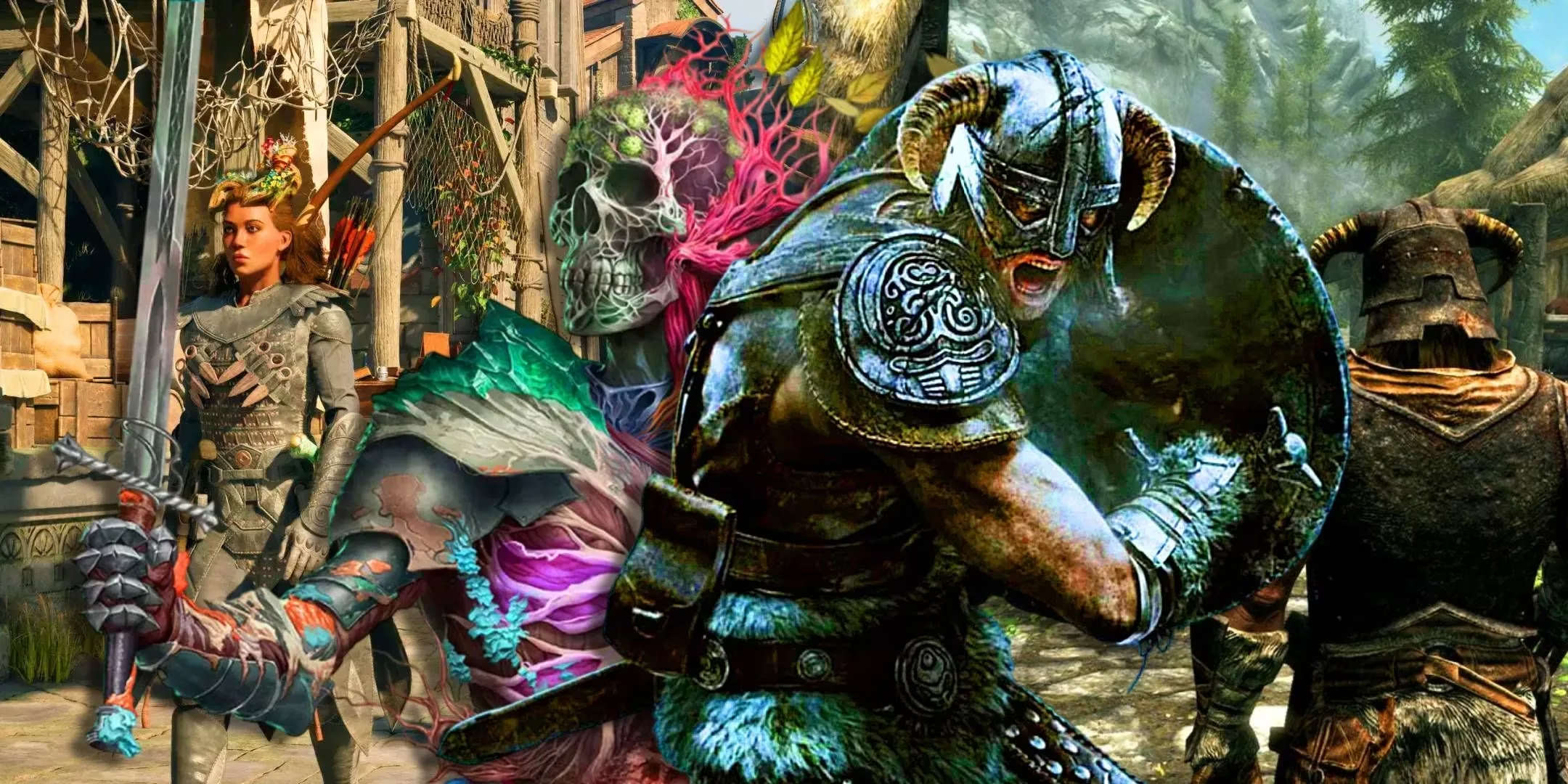
I'll be real with y'all: I spent a decade treating Skyrim's map like a full-time job and still never finished the main quest. So when Avowed dropped on February 18, 2025, I was ready to lose another 200 hours to guilt-free wandering. Instead, Obsidian handed me something that felt almost rude: a smaller world. Not tiny, but deliberately chopped into open zones. My first instinct was side-eye. A year later, I'm here to eat crow, and honestly, it tastes like sweet rolls.
Avowed is not a strictly open-world behemoth. It is carved into open zones, much like The Outer Worlds, and that rubbed some folks the wrong way before launch. People wanted Skyrim 2: Electric Boogaloo. Obsidian said, 'Nah, let's get cozy.' Region director Berto Ritger and narrative designer Kate Dollarhyde explained to GameSpot that the zone setup is all about pacing. Dollarhyde put it plainly: 'You never know where the player is and what they're doing at any given time. So having these zones that happen in sequence means we always know what content you've just come from on the critical path.' In plain English, that means I can no longer spend eight hours collecting butterflies while the apocalypse twiddles its thumbs.
Dense Is the New Big
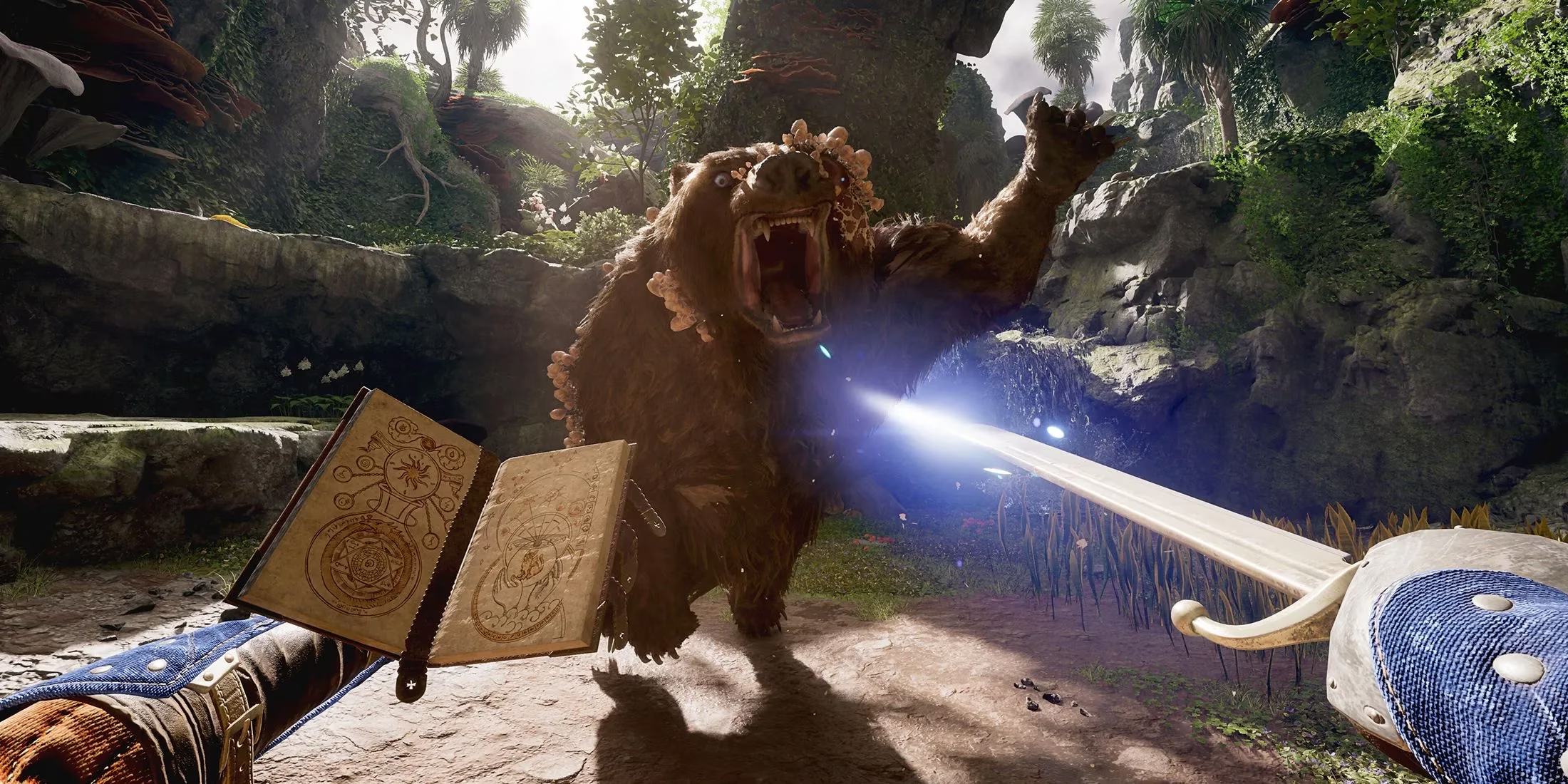
Smaller maps do not mean empty maps. Avowed's zones are packed like a Yakuza district. Every corner has loot, hidden quests, vertical climbs, NPCs, and bosses that sucker-punch you when you least expect it. One starting region alone has a full town, secrets tucked behind waterfalls, optional fights, and at least one boss that made me question my entire build. This is closer to Indiana Jones and the Great Circle than Skyrim. Instead of walking for ten minutes through beautiful nothing, I was tripping over something interesting every forty-five seconds.
That sense of constant discovery is the magic. Massive open worlds often pad themselves with commute time. Avowed removes the commute and keeps the good stuff coming. It condenses environmental storytelling, side content, and combat encounters so tightly that the world feels larger than it is, because you are always swimming in stuff to do.
Bigger Isn't Always Better
RPGs have a sickness, and I am calling it Map Bloat. Todd Howard famously claimed Fallout 76 would be four times the size and sixteen times more detailed than Fallout 4. Spoiler: it was bigger, sure, but 'detailed' was doing a lot of heavy lifting. Cyberpunk 2077 launched with a massive city and enough bugs to form a union. Assassin's Creed Valhalla's England was gorgeous but about as lively as a museum after closing. Starfield's zone-and-loading rhythm sometimes felt like a slideshow with extra steps.
| Game | World Approach | My Emotional State |
|---|---|---|
| Skyrim | One giant map | Lost, happy, zero main quests done |
| AC Valhalla | Giant map, sparse | Gorgeous but sleepy |
| Fallout 76 | Four times bigger | Bug-fighting survival sim |
| Avowed | Dense open zones | Actually finishing quests |
This is not to say open worlds are bad. Elden Ring and Breath of the Wild proved you can guide players without shoving them. But replicating that magic is hard, and plenty of studios have face-planted trying. Avowed took a different lane: shrink the square footage, crank up the detail, and let the player feel smart for poking around.
Why This Could Be a Blueprint
Now that we are in 2026, I can say Avowed's 80/100 critic average undersold how refreshing it felt. A year later, I still remember specific encounters and side quests from Avowed. I cannot say the same about half the fetch quests I did in Valhalla. Maybe that is the real win: memorability over square mileage.
If Obsidian's approach influences future open-area RPGs, I am all for it. I love a map that takes two real-world days to cross, but my gaming time is precious. Avowed's denser zones made me feel like a fantasy adventurer again instead of a cartographer with a sword. Smaller maps with better pacing, hidden depth, and fewer dead zones should not feel controversial. It should feel like common sense.