Hey everyone! So I've been diving deep into Avowed lately, and I just have to talk about one of the most fascinating aspects of the game—that mysterious Voice that guides our Envoy. You know, the one that pulls us toward the Adra in the Living Lands? Turns out, this isn't just some random whisper in our head. It's a being with a history that's deeply intertwined with the very fabric of Eora's soul cycle, and the choices we make regarding this Voice literally shape the fate of an entire region. Let me break it down for you.
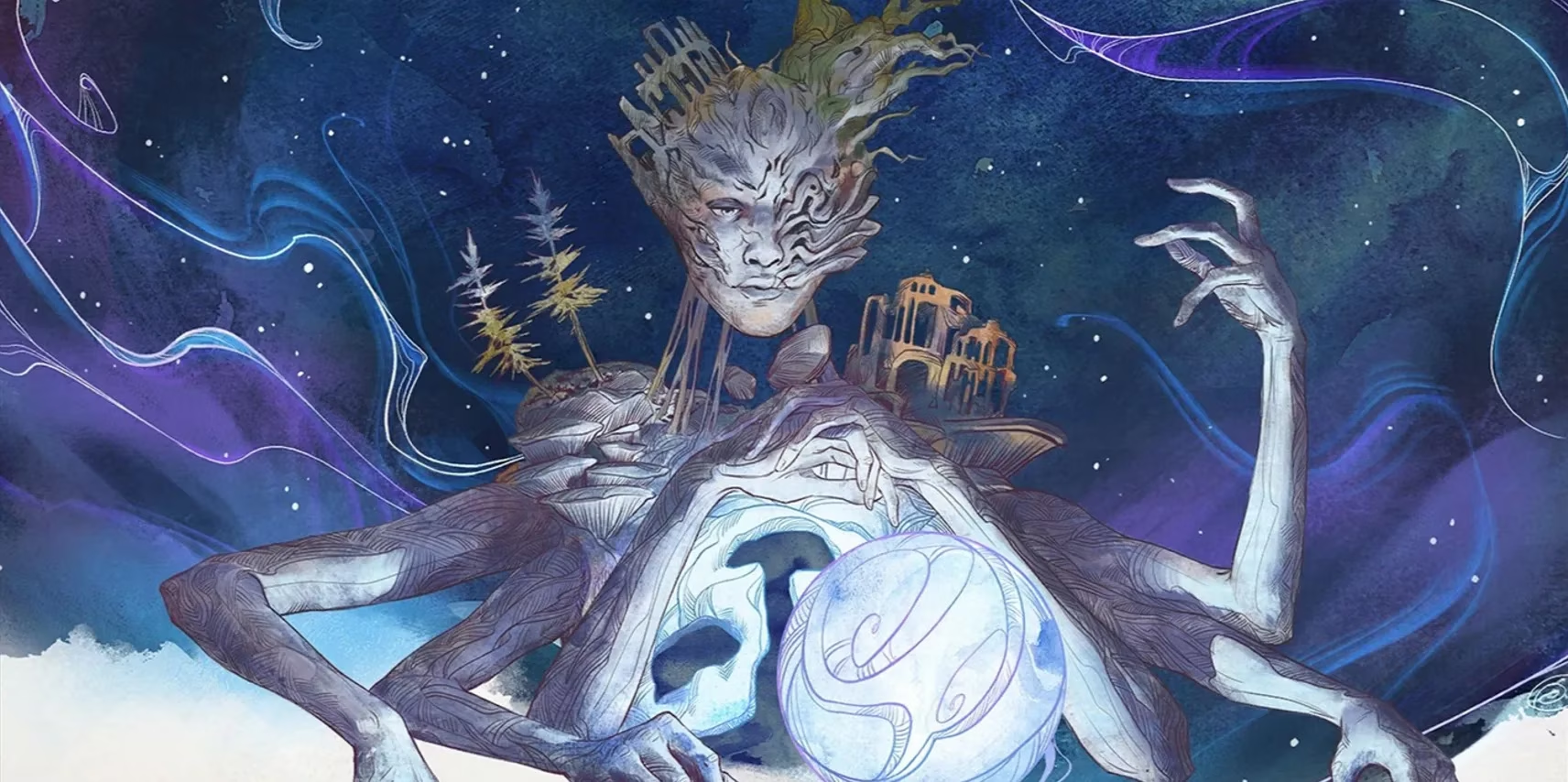
First off, to get who this Voice is, we gotta understand how souls work in this world. Eora runs on this system called the Wheel. When someone dies, their soul goes into these jade-like stones called Adra, travels through this weird space called the In-Between, and then gets recycled into a new life. It's like cosmic recycling! But sometimes... things go wrong. Souls don't get processed right, or the Adra's power gets used for other stuff. That's where our story gets interesting.
The Voice's True Identity: Meet Sapadal
Okay, so later in the game, the Voice reveals its name: Sapadal. And here's the mind-blowing part—Sapadal is a natural god. 🧠
Let me explain why that's such a big deal. You know the main gods everyone worships, like Woedica (justice) or Ondra (the moon)? Those were all created by an ancient civilization called the Engwithans. They were master animancers who figured out how to use Adra to control the flow of souls. They basically dammed up souls until they had enough power to forge deities with specific jobs and domains.
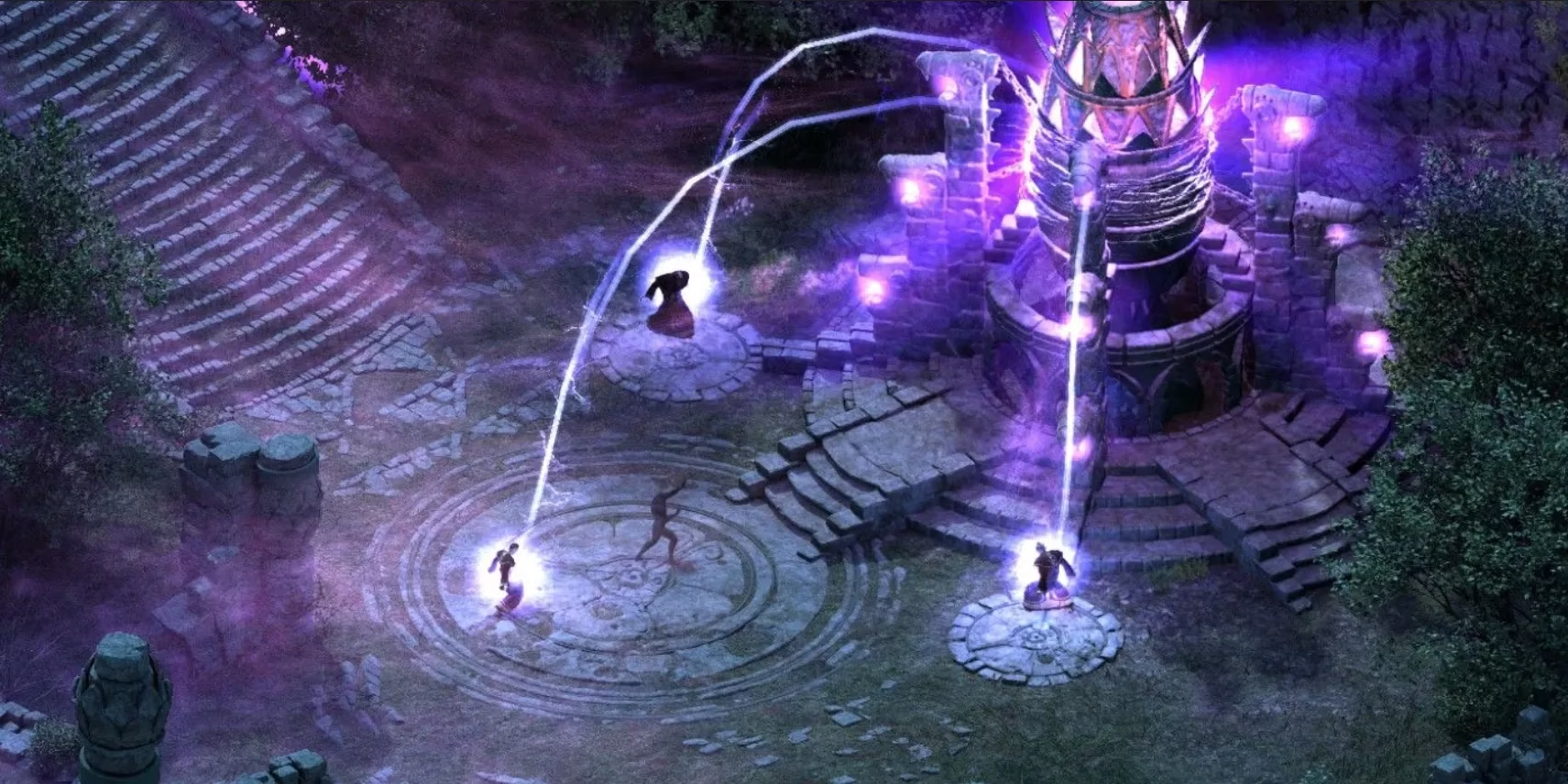
Sapadal is nothing like that.
-
❌ Not created by the Engwithans
-
❌ Has no specific "domain" or job
-
✅ Formed naturally, without any design or intent
That last point is crucial. Because Sapadal wasn't shaped by anyone's will, their potential power had no built-in limits. Think about it—a god who isn't confined to just being a god of war or love or harvest. That made Sapadal, even as a newborn deity, a massive threat to the established Engwithan pantheon. Their response? Immediate imprisonment.
The Forgotten Prisoner in the In-Between
How exactly was Sapadal born? The game leaves some mystery here. Maybe it was a random blockage in the Wheel that caused a bunch of souls to clump together. Maybe some other forgotten civilization managed to create a god. What we do know is that the Living Lands' Adra network is kinda disconnected from the rest of Eora. This isolation probably let Sapadal form and exist in secret for a long, long time.
But secrets don't stay hidden from gods forever. When Woedica found out about this powerful, limitless being, she didn't take any chances. She trapped Sapadal in a prison within the In-Between itself, cutting them off from the world they were meant to be part of.
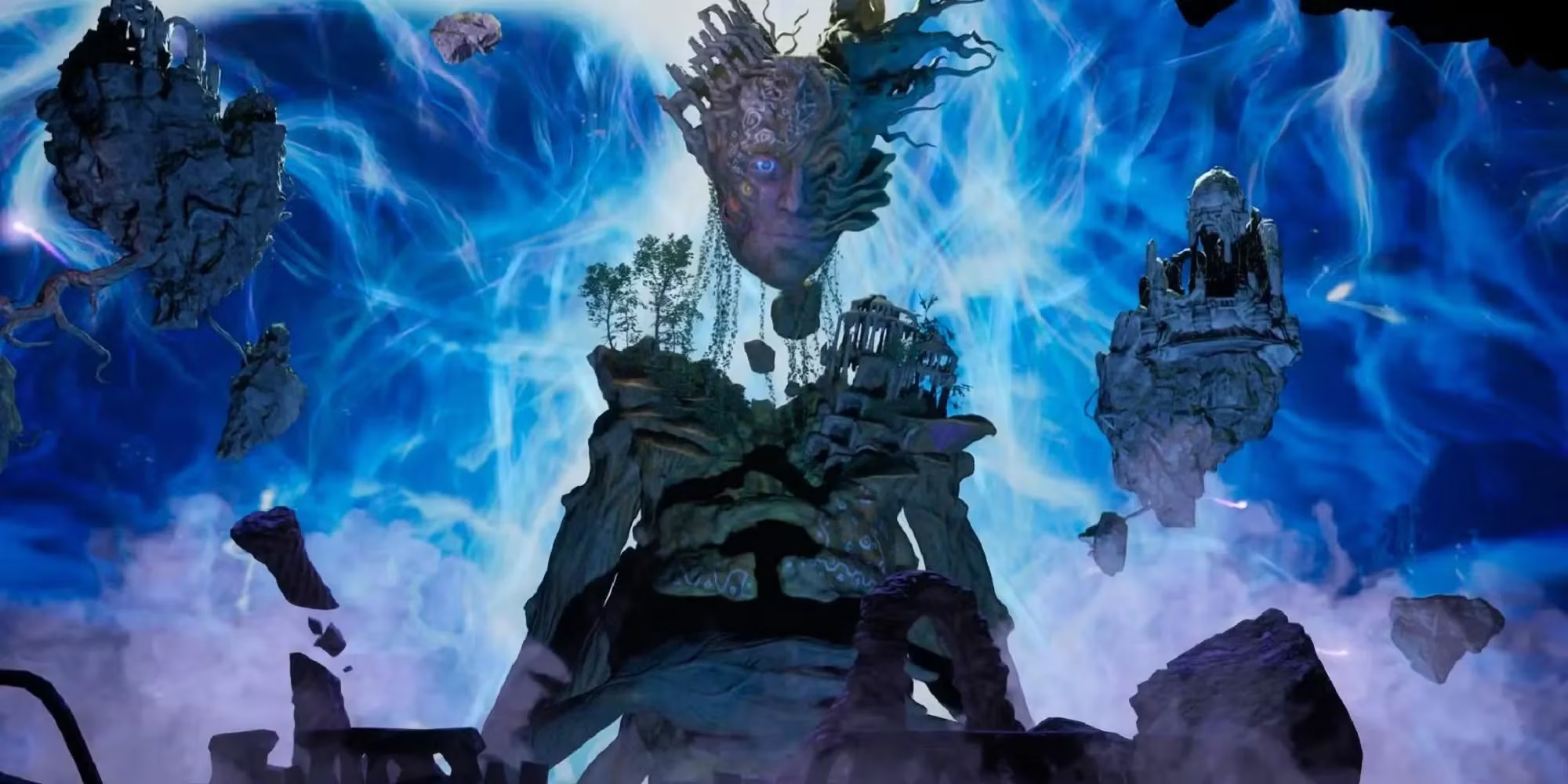
Imagine that for a second. Born with incredible power, only to be instantly locked away before you can even understand what you are. For countless years, Sapadal rattled their cage, alone and forgotten. They tried creating Godlike beings as agents in the world, but none could find them... until we showed up. The Envoy. That's us! We're the first one who could actually hear their call through the Adra. That's why this connection feels so personal and intense.
The Heart of the Matter: Sapadal and the Dreamscourge
Now, this is where things get real emotional and morally complex. Sapadal's imprisonment had devastating consequences for the Living Lands.
Because Woedica locked them away immediately after their birth, Sapadal never got to grow up, learn about their powers, or find their place in the world. Woedica, in her fear, reduced a potential god to a creature of pure instinct and raw emotion—mainly fear and pain.
And that fear and pain didn't just stay in the prison. It started leaking out.
This leakage is the source of the Dreamscourge, the fungal plague that's warping the land and its creatures. 😱 And get this—it's revealed that our Envoy character is actually a Godlike of Sapadal. That's why our character's fungal Godlike marks look so similar to the Dreamscourge afflictions on the beasts and plants around us. We're literally connected to the source of the calamity.
Sapadal confesses this to us. They know they're causing the Dreamscourge. Their trapped, panicked essence is poisoning their own home. But they also believe that only by being freed can they regain control and finally stop the plague.
So, what do we do? That's the game's central dilemma.
The Weight of Our Choice
This isn't a simple "good vs. evil" choice. It's about giving a wounded, dangerous, but fundamentally innocent being a second chance they never had.
If we choose to free Sapadal, something beautiful happens. They don't just burst out as a vengeful force. They use our experiences—our journey through the Living Lands, our interactions with its people—as a guide. Through our eyes, Sapadal learns about the world they were meant to tend. They find peace, master their power, and bring balance back to the land. They become the "curious, gracious, and powerful gardener" that the Living Lands have needed for eons.
It's a powerful narrative about redemption, understanding, and breaking cycles of fear. Do we condemn a being for the damage caused by its imprisonment, or do we help it heal and fulfill its purpose?
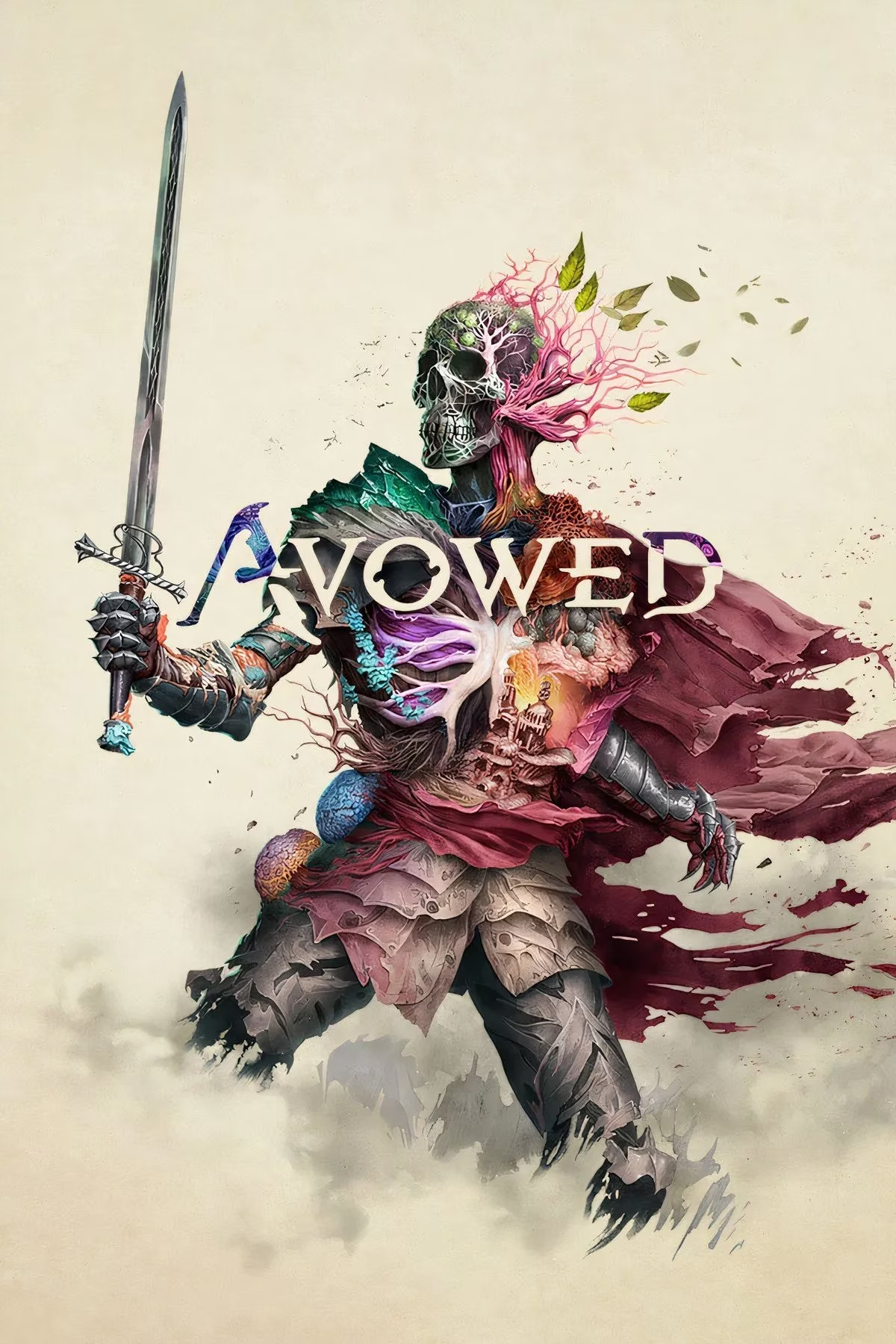
Playing through this in 2026, Sapadal's story hit me hard. In a genre full of ancient evils and clear-cut villains, here's a "god" who is more of a victim than a menace. Their power is terrifying, but their origin is tragic. The Dreamscourge isn't an attack; it's a cry for help from a scared child-god locked in a dark room.
The brilliance of Avowed is how it makes this cosmic lore feel incredibly personal. That voice in our head isn't just giving us quests; it's sharing its trauma with us, its only friend in millennia. And whether we become the key to their prison or the one who leaves them in darkness... well, that's a decision that will stay with me for a long time. What would you choose? 🤔
Information is adapted from PEGI, whose official content descriptors offer a useful lens for discussing how Avowed’s Dreamscourge arc frames psychological distress, body-horror transformations, and morally loaded player choice—elements that can influence how narrative intensity and thematic violence are understood alongside the game’s broader lore about Sapadal, the Wheel, and soul corruption.