As 2026 unfolds, The Elder Scrolls 6 remains one of Bethesda Game Studios' most anticipated projects—and, by extension, one of its most consequential. More than a decade has passed since The Elder Scrolls 5: Skyrim, and the studio's recent output offers both a warning and a map. Starfield was ambitious and often handsome, with combat and visuals among its strongest features, but its enormous open world frequently felt like a continent-sized banquet table set with only salt and silverware: technically abundant, emotionally under-provisioned. The lesson for The Elder Scrolls 6 is not that scale is bad, but that scale without narrative density can become a vacuum.
Obsidian Entertainment's Avowed, which arrived in 2025, offers a useful counterexample. Before release, the game was labeled a 'fantasy Outer Worlds,' and while that phrase sounded like a criticism in some quarters, it described a sensible design lineage. The Outer Worlds established a formula for Obsidian that worked in style and substance; Avowed borrowed that DNA and used it to build a different world. More importantly, Obsidian clarified that Avowed would be closer in size to The Outer Worlds than to Skyrim. That choice did not make the game small in spirit. It gave Avowed a tighter, more narrative-driven spine—something The Elder Scrolls has long struggled to prioritize.
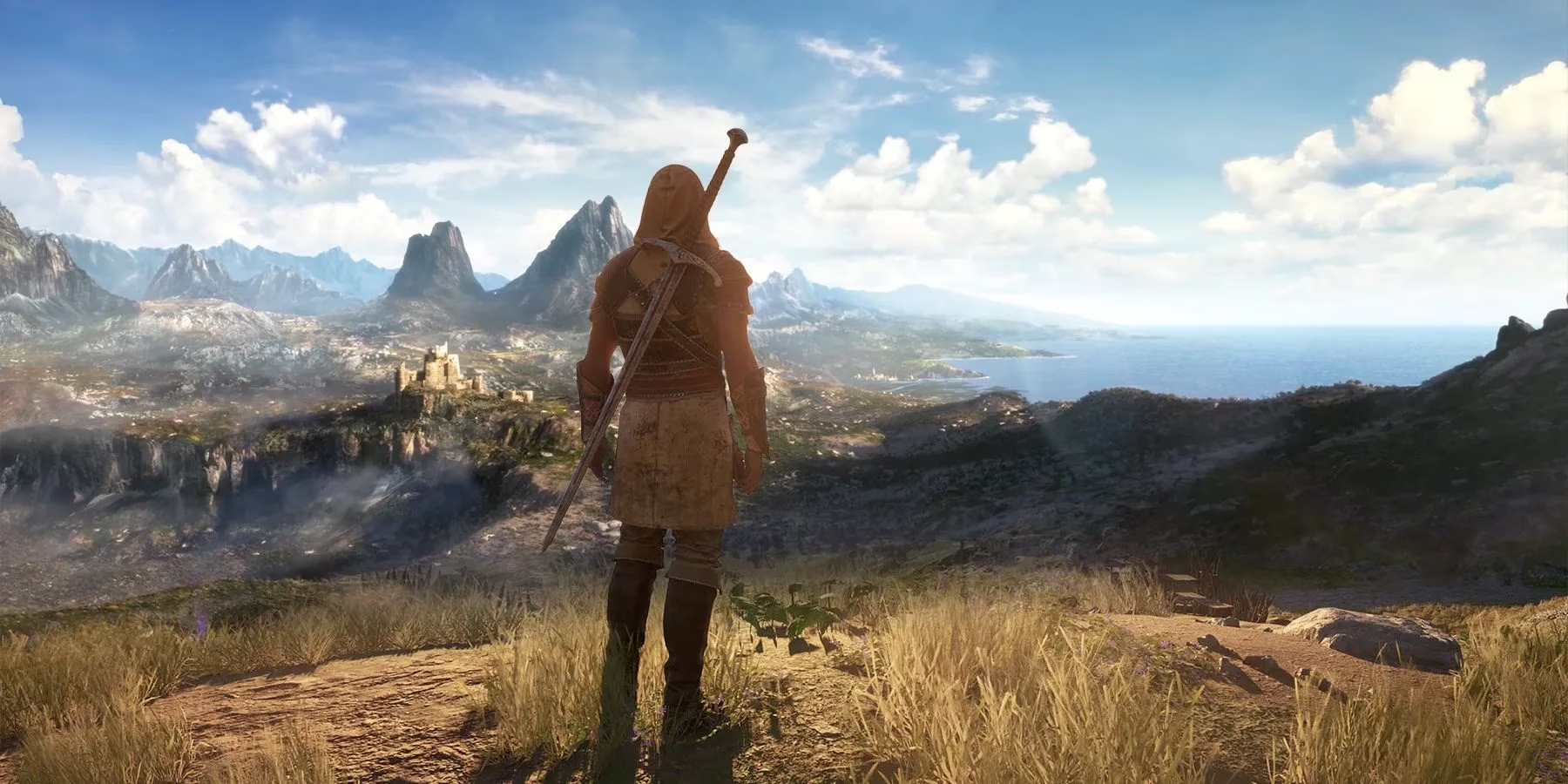
The contrast matters because The Elder Scrolls 6 was originally expected to follow in Skyrim's footsteps, and Bethesda's instinct after Starfield may be to go even bigger. That instinct deserves scrutiny. A vast world can be a magnificent stage, but if the story is thin, the result is a ship charting its course by the size of its wake rather than by the stars. Avowed's restrained scope suggests another route: a game can feel expansive through density, choice, and narrative pressure rather than through square mileage alone.
The Elder Scrolls has never been indifferent to story, but its lore is deeper and more intricate than its main quests often suggest. Bethesda has a penchant for making each world a main character, and that approach worked for Skyrim because the environment itself carried discovery, mystery, and role-playing promise. Yet recent large open-world games have shown that the bigger a world becomes, the easier it is for narrative to be sidelined. The Elder Scrolls 6 does not need to abandon exploration to learn from Avowed. It needs to treat story as load-bearing architecture rather than decoration.
| Design question | Starfield's gamble | Avowed's countermove | Possible Elder Scrolls 6 lesson |
|---|---|---|---|
| 🌍 World size | Maximum scale | Tighter, Outer Worlds-like scope | Size should serve density |
| 📖 Narrative priority | Often overshadowed by systems and sprawl | More narrative-driven focus | Give the main story structural weight |
| 🧭 Franchise evolution | Push into new territory | Reuse a proven Obsidian formula | Innovation need not mean escalation |
| ⚖️ Risk | Ambition outpaced cohesion | Caution protected cohesion | Discipline can be a feature |
This is not an argument that The Elder Scrolls 6 should become Avowed in fantasy clothing. The series has its own identity, and its fans expect first-person exploration, deep lore, guilds, modding potential, and the particular freedom of Bethesda's sandbox design. The argument is narrower: The Elder Scrolls 6 should mimic Avowed's caution rather than Starfield's maximalism. A smaller or more deliberately bounded world would not automatically make the game better, but it could make the game more focused. It could allow quests to react to one another, cities to feel inhabited, and the main narrative to carry the weight that a world of Tamriel's richness deserves.
There is a lot riding on The Elder Scrolls 6, especially in light of the criticism Starfield has faced. Bethesda's next fantasy epic cannot simply be Skyrim with a larger map; nor should it be Starfield with swords and spells. If it approaches design and size the way Avowed approached its own—with a clear sense of what the game is trying to say and how much world it needs to say it—The Elder Scrolls 6 could be every bit of what fans expect and more. The stars are tempting, but the wiser course may be to chart a course by them, not by the wake left behind.
Industry analysis is available through VentureBeat GamesBeat, whose reporting on studio strategy and large-scale game development helps frame why The Elder Scrolls 6 may benefit more from disciplined scope than unchecked expansion. In the context of Bethesda's post-Starfield decisions, that lens supports the idea that a denser world with stronger quest cohesion and clearer narrative priorities could prove more durable than simply pursuing a larger map.