I still remember stepping into the world of Eora for the first time, a fresh settler stepping off a boat with nothing but a vague past and a sudden, traumatic ability to speak with the dead. That was the Watcher, my blank slate in Pillars of Eternity. Years later, I returned to the same universe in Avowed, but this time I wasn't just another nobody. I was the Envoy of the Aedyran emperor, marked by a god since birth, and I felt the weight of that identity with every conversation and decision. Both are Obsidian Entertainment protagonists, but the shift from the Watcher to the Envoy isn't just cosmetic—it’s a fundamental rethinking of how a defined character can shape storytelling, agency, and immersion. Having played both extensively by 2026, I’ve come to appreciate why this evolution was necessary and how it changes the way we experience the Living Lands.
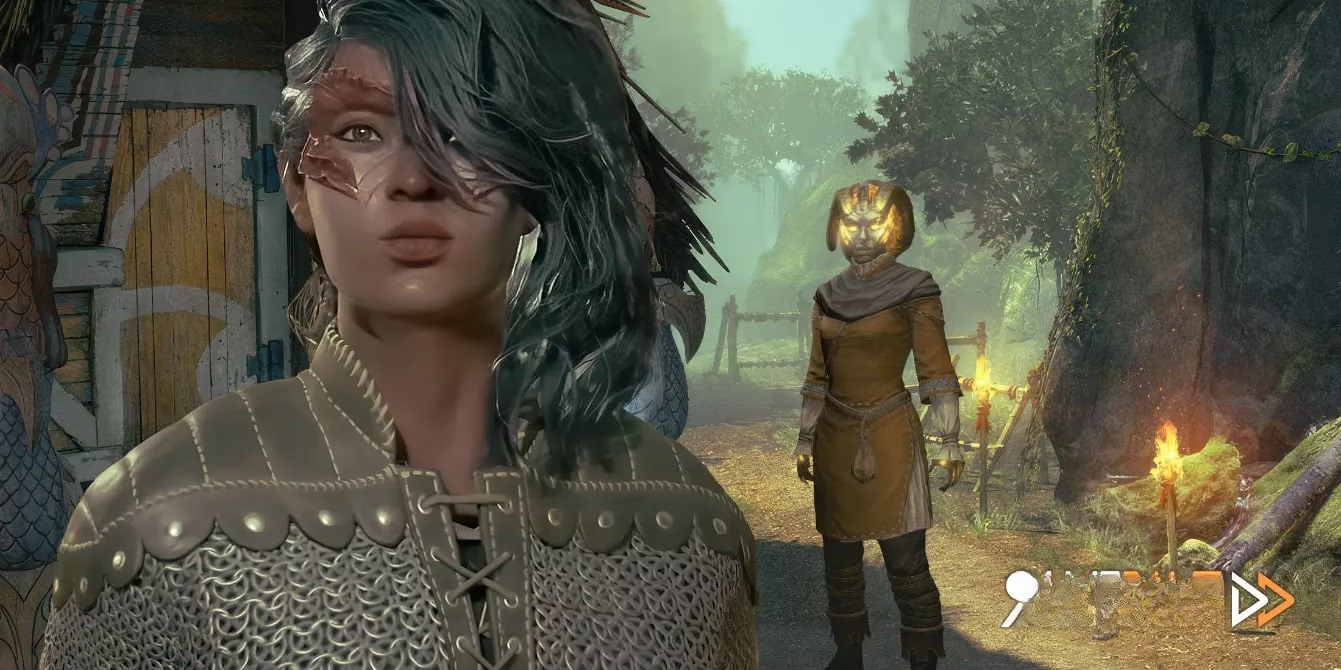
At first glance, the two heroes might seem cut from the same cloth. They’re both outsiders thrust into chaotic regions, both grappling with personal and metaphysical stakes, and both inevitably shaping the fate of nations and gods alike. That’s the Obsidian signature—protagonists who feel consequential because we, the players, steer their choices. But the moment I took control of the Envoy, I noticed a crucial difference: the world reacted to me differently. The Watcher was a nobody who stumbled into power; the Envoy arrives with power already woven into their identity. People know who you are, or at least who you represent. That changes everything.
Kate Dollarhyde, the senior narrative designer on Avowed, explained it perfectly in an interview: "The Envoy is a political representative of the Aedyran empire, invested with power and responsibility in their role as the emperor’s envoy, while the Watcher is initially a settler who’s arrived in an Aedyran colony to make a new life." This isn't just backstory flavor—it defines the entire narrative frame. When I walked into a settlement as the Envoy, I wasn't asking for permission to help; I was expected to mediate, to enforce, to judge. The sense of authority was intoxicating and, at times, deeply isolating. Could I really speak for an empire I was beginning to question? That tension fueled every interaction, and I often found myself asking, “Would a true diplomat say this, or am I letting my own doubts slip?”
The Watcher, by contrast, was an empty vessel I filled with my own imagination. In Pillars of Eternity, I loved the flexibility of defining my character’s background, culture, and motivations entirely. But that freedom came with a narrative cost—the world didn't have strong preconceived notions about me, so the story had to work harder to give me a reason to care. In Avowed, the Envoy’s pre-existing role eliminates that friction: I cared because the emperor demanded my loyalty, because the mysterious god’s touch inside me wanted answers, because the Living Lands saw me as a symbol of imperial interference. The story felt tighter, more urgent. Isn’t it intriguing that a more limited protagonist can actually deepen roleplaying? Instead of asking “Who am I?” I found myself wrestling with “What am I willing to become?”
Dollarhyde revealed that this wasn’t the original plan. "In the earliest days of Avowed... we wanted to have a blank-slate player character... similar to the Watcher." But as the plot grew more intricate, tying together divine mysteries and colonial politics, a blank slate became a liability. The development team needed a central thread to weave these elements together, and the Envoy—defined but still malleable in personality—was that thread. This decision echoes a broader trend I’ve observed in RPGs by 2026: players are increasingly drawn to protagonists with a strong narrative presence, as long as they can still shape their beliefs and relationships. The Envoy becomes a bridge between the authored story Obsidian wanted to tell and the personal story I wanted to experience.
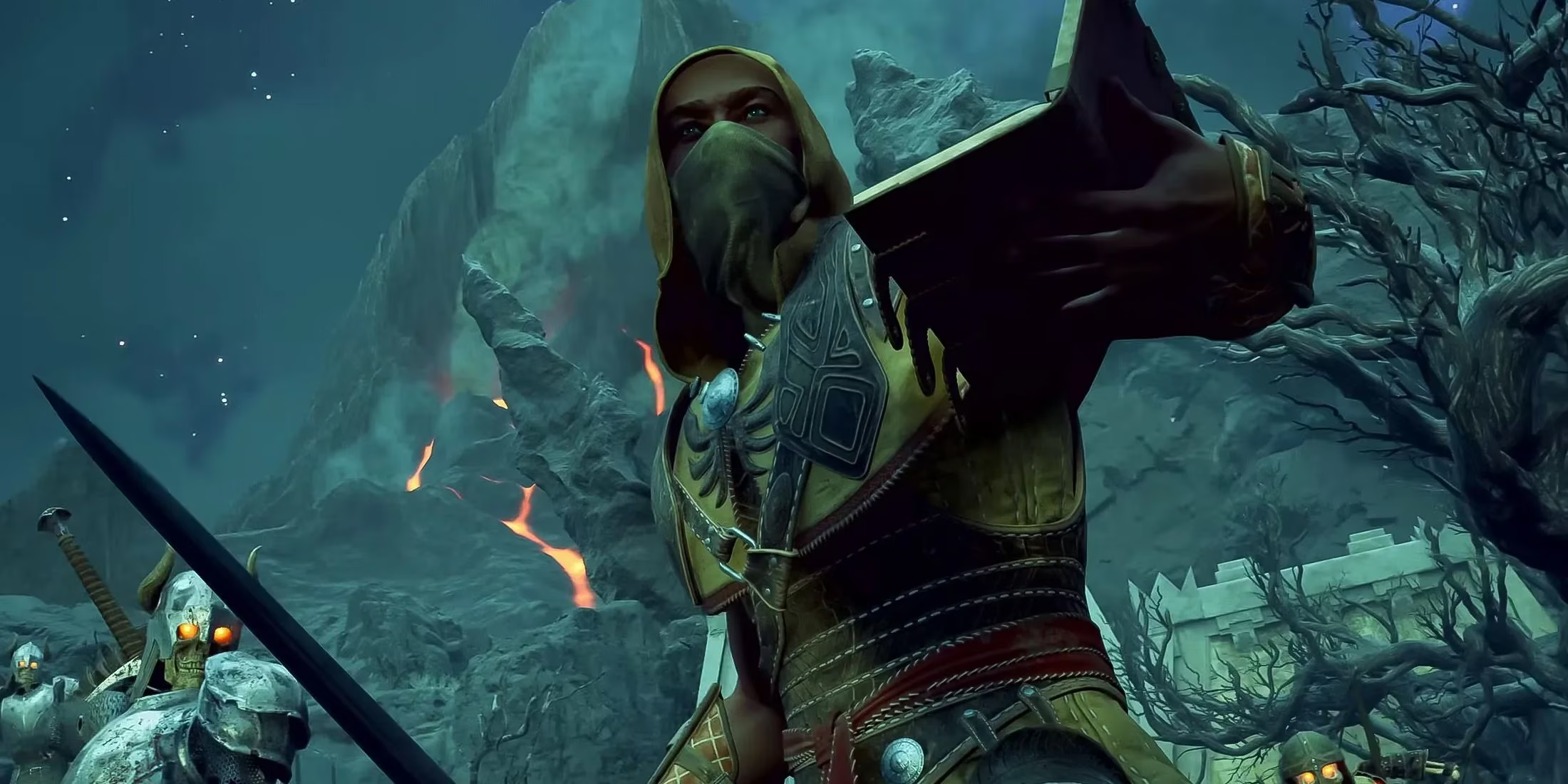
So, where does player agency fit in? Even with a more defined starting point, I never felt railroaded. I could decide how my Envoy was noticed by the emperor—perhaps through military service, clever diplomacy, or a fateful supernatural event. I could choose whether they resented their divine connection or embraced it with fervor. In dialogue, I often balanced the haughty demeanor of an imperial agent with the compassion of a reluctant hero. In one memorable questline, I had to judge a town’s rebellion against Aedyran law. My mind told me to uphold order, but my heart saw their suffering. That internal conflict was possible precisely because the game had given me a clear role to struggle against. The Watcher never had that built-in conflict; I had to create it from scratch. Sometimes, I wonder: does a character’s depth come from the absence of definition or from the friction between their assigned identity and our chosen actions? My time in Avowed convinced me it’s the latter.
The Envoy’s divine touch also adds a layer of mysticism that the Watcher acquired only later. From birth, the Envoy is connected to a god, granting unique spiritual powers that blur the line between mortal and divine. This isn’t just a combat tool—it’s a philosophical burden. In contrast, the Watcher earned the gods’ attention through trauma, becoming Berath’s bounty hunter only after proving capable. The Envoy enters the stage already chosen, which raises thorny questions about destiny and free will. I often stopped mid-quest to ponder, “Is my power a gift or a curse? Am I a pawn of the gods, or can I defy them?” That existential texture is harder to achieve when your protagonist begins as a blank page.
By 2026, both Pillars of Eternity and Avowed stand as masterclasses in roleplaying design, but for different reasons. The Watcher remains the ultimate canvas for those who want total authorship over their character’s soul. The Envoy, however, offers something rarer: a predefined external shell that you fill with internal nuance. As I look back, I realize neither approach is superior; they’re just different tools for different tales. What excites me most is how Obsidian dared to break its own mold. The Envoy proves that a hero with a name whispered before they even arrive can still feel like mine. And in a genre that constantly battles between narrative control and player freedom, that’s a revelation worth celebrating. So, which kind of protagonist will you choose for your next adventure—the blank slate or the defined soul? Either way, Eora is waiting.