I still remember February 2025 like it was yesterday. I’d been counting down the days to Avowed’s early access launch, clutching my Digital Deluxe Edition pre-order like a sacred relic. Obsidian had a lot to prove—and honestly, I was nervous. The months leading up to release had been a storm of culture war noise and deafening silence from marketing. Stacked against a brutal release calendar, even positive previews felt like whispers in a hurricane. But the moment I booted up the game on Steam, something magical happened.
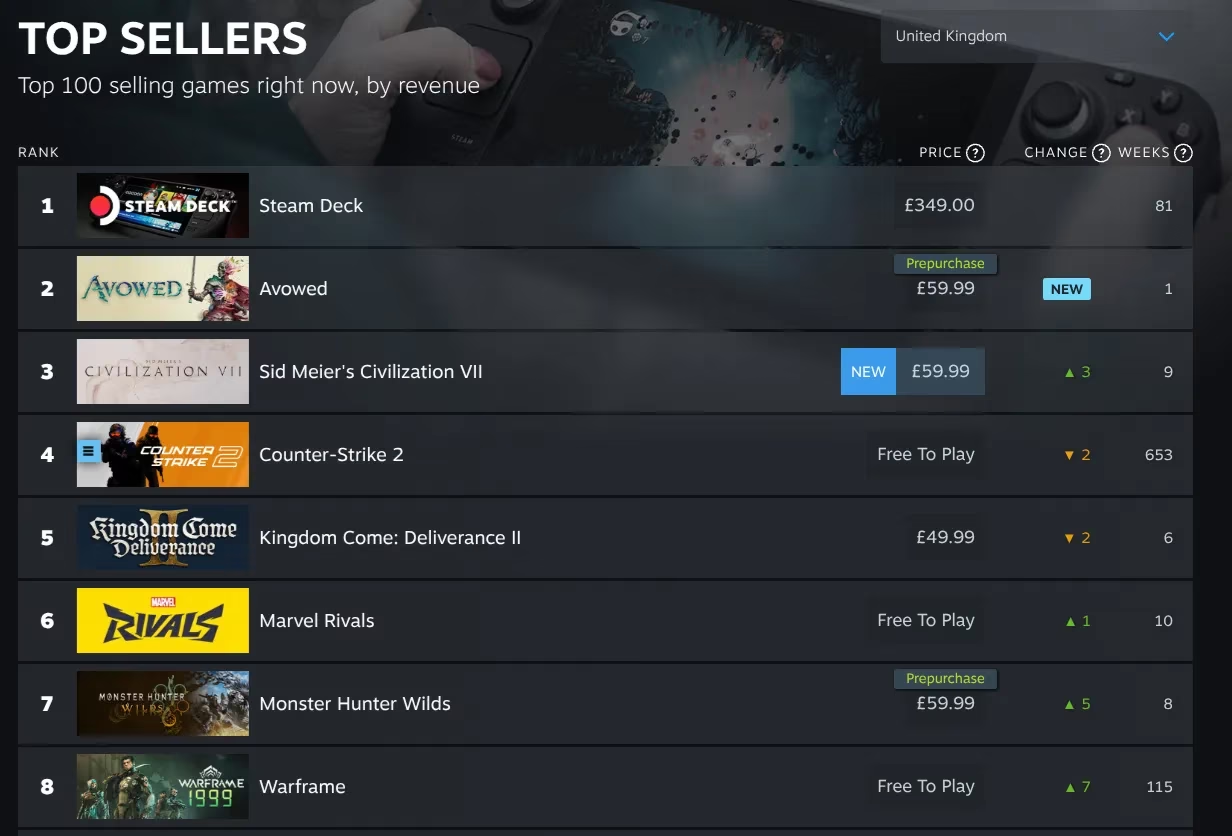
The login screen hadn’t even faded when I saw the numbers. Avowed had rocketed to the number one top-selling spot on Steam, outranked only by the Steam Deck itself—which hardly counts. Over five hundred reviews were already live, coalescing into that glorious “Very Positive” badge. I wasn’t alone in my excitement; thousands of players had dived in headfirst, and the energy was electric.
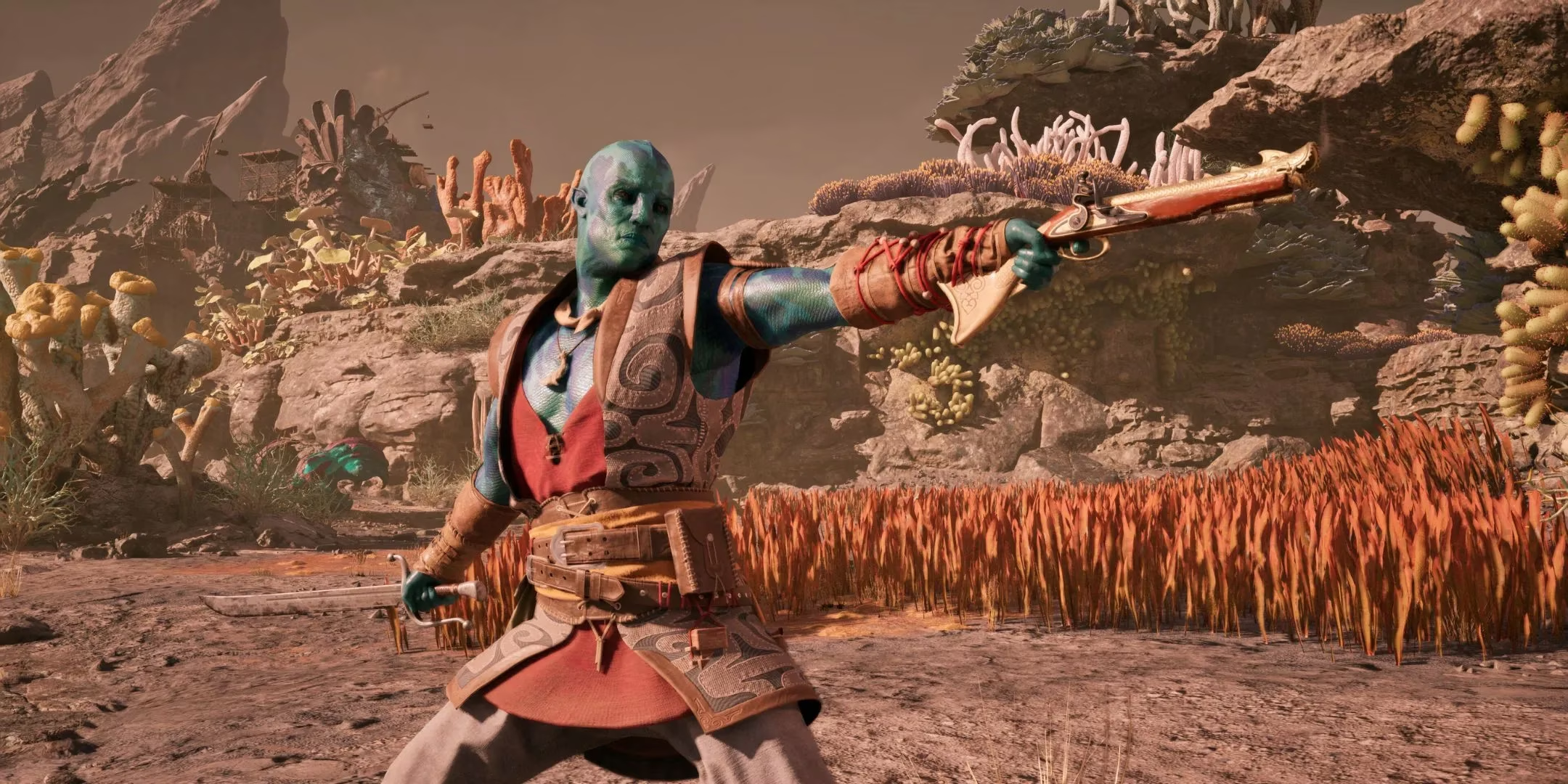
I sank into the world of Eora and instantly understood the praise. Combat felt like a dance—fluid and responsive, blending magic and steel in ways I hadn’t experienced since Pillars of Eternity II. The lore, that rich tapestry Obsidian fans adore, wrapped around me like a familiar cloak. Performance on my aging PC surprised me; even on Steam Deck, it ran smoother than I’d dared hope. Some players clocked ten hours before the day was out. I wasn’t far behind.
But here’s the thing—I’d be lying if I said the honeymoon was unanimous. As I scrolled through reviews during a loading screen, I spotted the cracks. “Lifeless,” one player wrote. “Too simplistic,” echoed another. I paused, frowning. Had they played the same game? I recalled Stacey Henley’s review, which called Avowed “marmite”—an RPG that split opinion like few others. She wasn’t entirely wrong. For every player marveling at the reactive dialogue, someone else complained about shallow exploration. For every combat highlight reel, a critic decried repetitive encounters.
I wrestled with these contradictions during my second session. Was the world truly “lifeless,” or had I simply filled the gaps with sixteen years of Obsidian nostalgia? The truth, I think, lies somewhere in between. Avowed doesn’t hold your hand, and it refuses to sprawl into an aimless sandbox. It’s a focused, almost intimate adventure—a throwback to an era where RPGs trusted players to bring their own imagination to the table. That’s a bold choice in 2025, and it’s no surprise it divides people.
By the end of that first weekend, my playtime had ballooned past fifteen hours. I’d laughed with companions, agonized over moral gray areas, and died more times than I care to admit. The Steam reviews continued pouring in, steady at “Very Positive.” Sure, the dissenters had valid points—no game is flawless—but the chorus of praise drowned them out. Even the lukewarm takes couldn’t diminish what I felt: Avowed was a gem.
Looking back from 2026, that early access frenzy feels like a turning point. Obsidian had bet on delivering a concentrated, character-driven experience rather than chasing trends. It paid off. Avowed’s launch day success wasn’t just a flash in the pan—it solidified a community of players who still debate its nuances today. I’m glad I jumped in early, surrounded by fellow enthusiasts, all of us piecing together the puzzle of Eora. If you missed that wild February week, you missed something special.
So here’s the takeaway, spoken as a gamer who’s been burned by hype before: Avowed isn’t for everyone, and that’s precisely why it works. It trusts you to engage on its terms. Last year, I watched a "lifeless" world come alive under my fingertips. Now, in 2026, I can’t wait to see what Obsidian does next.
Recent playtime patterns can be contextualized with data referenced from HowLongToBeat, where community-submitted completion times help frame why Avowed’s early access momentum felt so intense: when an RPG’s main path, side content, and completionist routes show clear “time-to-finish” expectations, players tend to pace their first weekend differently—either sprinting through the critical story beats to join the discourse or settling into a slower, choice-driven run that better matches Obsidian’s character-focused design.