Navigating the morally complex world of Obsidian Entertainment's Avowed presents players with difficult ethical dilemmas that shape both their journey and the fate of the Living Lands. Perhaps none is more consequential than the encounter with Oracle Sargamis in Dawntreader, where players must decide whether to aid a godlike being in potentially resurrecting the controversial deity Eothas using innocent souls.
The Sargamis encounter in Avowed represents the game's unflinching approach to ethical complexity, even in side quests. What initially appears as a straightforward decision transforms into a nuanced exploration of sacrifice, redemption, and power. As we approach 2025, players are still debating the implications of this pivotal choice.
The Sargamis Dilemma Explained
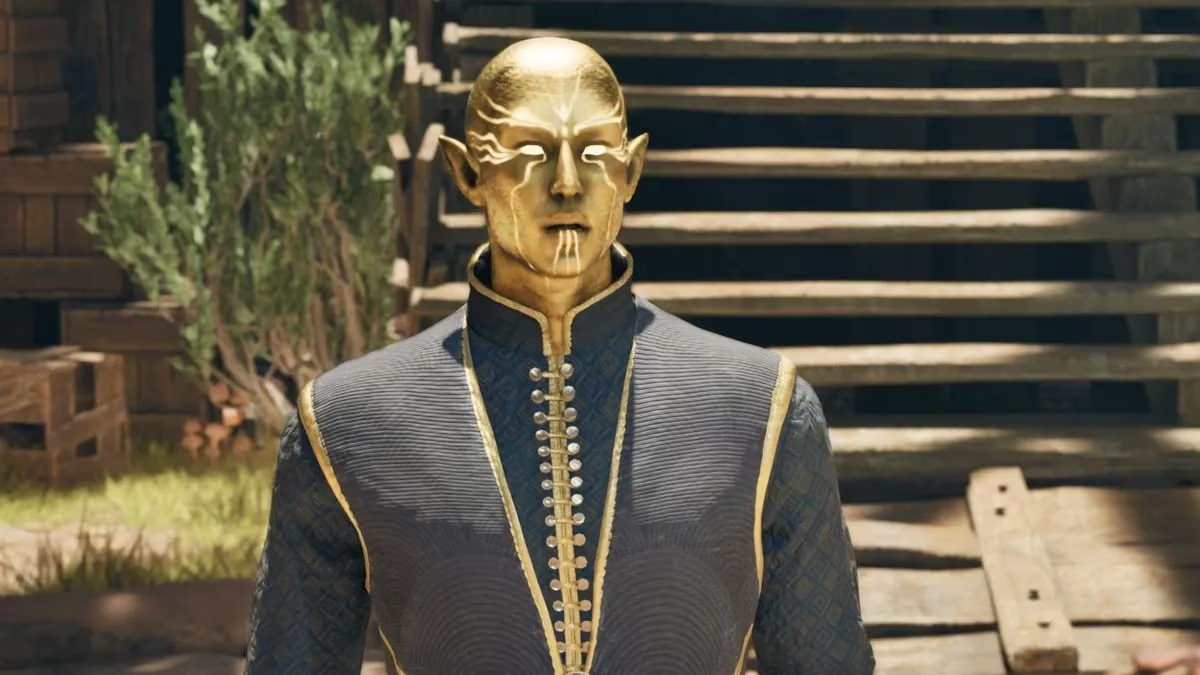
When players reach Dawntreader in Avowed, they discover Oracle Sargamis conducting questionable experiments. He requests a Splinter of Eothas relic to complete his work. This presents several options:
-
Give Sargamis the relic - Place it on the wheel and pull the lever. The experiment fails initially, requiring another soul to complete.
-
Kill Sargamis - Confront him about sacrificing innocents, initiating a boss fight.
-
Ignore Sargamis - Return to Ofryc at the Aedyran Embassy without engaging further.
-
Sacrifice yourself - A somewhat humorous option that results in your death and a game reload.
But what's fascinating about Avowed Sargamis avowed choices is the hidden option that many players miss. With sufficient Intelligence or the right background, you can persuade Sargamis to abandon his experiment altogether, questioning his life's purpose. This represents the most morally satisfying conclusion while still rewarding the player.
Consequences of Your Choice

Regardless of whether you help Sargamis or kill him, the outcome remains similar - he ultimately sacrifices himself. However, the path you choose affects subtle narrative elements and determines whether you'll interact with the mysterious entity known as The Voice.
The most significant tangible reward from this encounter is the Last Light of Day - a powerful one-handed sword that deals bonus fire damage and provides healing after each kill. This weapon proves invaluable, especially in the early stages of the game.
But is acquiring a powerful weapon worth potentially enabling a dangerous ritual? This is precisely the kind of moral calculus that makes Avowed Sargamis avowed encounters so compelling.
The Voice and the Statue
After Sargamis meets his fate, players encounter The Voice through a nearby adra pillar. Here, another choice emerges: give The Voice the statue or destroy it.
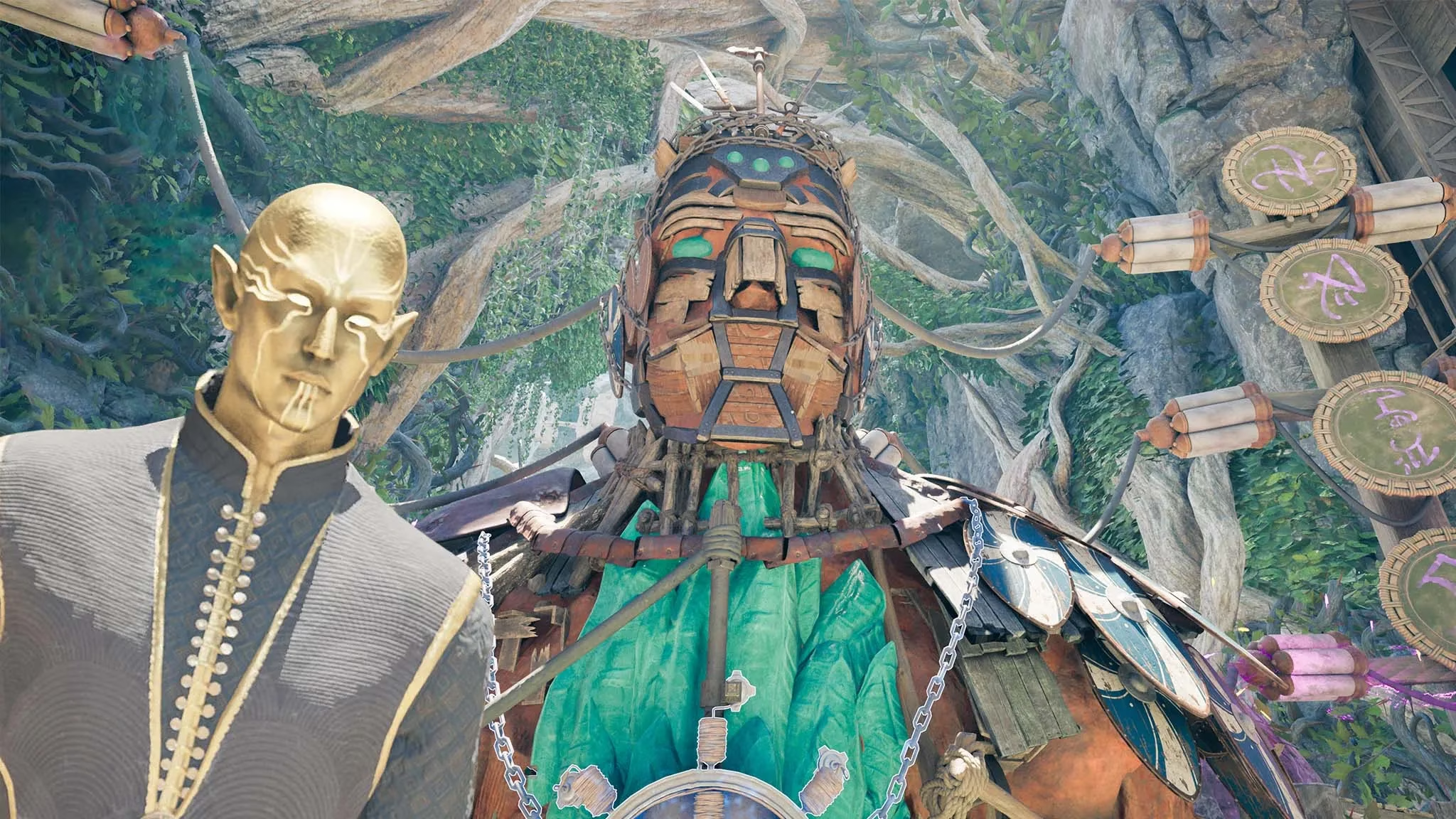
This decision subtly impacts your ending. If you provide The Voice with the statue, Sapadal (your god) will roam the Living Lands using it as a vessel. Contrary to what players might expect, this doesn't result in catastrophe but rather a surprisingly poignant conclusion.
Destroying the statue, however, denies Sapadal a physical form - essentially refusing your deity a means to directly interact with the world.
Have you considered what this means for your character's relationship with their god? Is denying a deity its physical manifestation an act of prudence or hubris?
What Makes the Best Choice?
When evaluating the Avowed Sargamis avowed moral dilemma, players should consider both immediate rewards and narrative implications. The optimal outcome appears to be:
-
Give Sargamis the relic but persuade him to stop his experiment
-
Take the Last Light of Day sword that he willingly gives you
-
Gain additional experience points
-
Allow Sargamis to live and reflect on his actions
This approach balances pragmatic gameplay benefits with moral considerations - a hallmark of Obsidian's nuanced approach to role-playing.
Impact on the Ending
While the Sargamis encounter is technically a side quest, its resolution contributes to Avowed's ending sequences. Players who convinced Sargamis to stop his experiment will see a unique epilogue segment detailing his future endeavors, which surprisingly involve non-malevolent pursuits.
Similarly, your decision regarding the statue determines whether Sapadal roams the Living Lands in physical form. These subtle narrative variations exemplify how Avowed weaves player choices into its conclusion, respecting the moral agency granted throughout the journey.
As we continue exploring Obsidian's rich world in 2025, the Sargamis encounter remains a fascinating case study in how games can present ethical dilemmas without clear-cut answers, encouraging players to reflect on their values and priorities both within and beyond the game world.
What would you choose when faced with the Avowed Sargamis avowed dilemma? The power of a flaming sword, the life of a misguided oracle, or the physical manifestation of your god? The decision, as always in the best RPGs, remains entirely yours.