In the sprawling fantasy realms of Obsidian Entertainment's Avowed, players have encountered a world that is as dangerous as it is deliberate. Set within the rich lore of the Pillars of Eternity universe, the game presents a diverse bestiary of adversaries, from classic skeletal warriors and giant arachnids to more unique, fantastical threats like sentient fungal beings and monstrous fauna. These foes are not mere palette swaps; they boast distinctive designs and combat methodologies, forcing players to adapt their tactics. Some rely on brute force and close-quarters assaults, while others wield devastating ranged attacks or arcane magics. This variety extends to formidable boss encounters, each presenting unique mechanics and challenges, whether they are amplified versions of common enemies or entirely new, terrifying entities. However, a defining and often debated feature of this world is its permanence: once an area is cleared of its hostile inhabitants, it remains eerily quiet, a design choice that has shaped the player experience since the game's 2025 release.

The Finality of Combat: No Enemy Respawning
The core tenet of Avowed's world design is the absence of enemy respawning. Unlike many open-world RPGs where cleared zones repopulate after a time or upon the player's return, vanquished foes in Avowed stay vanquished. This applies universally:
-
Common Enemies: Defeated skeletons, spiders, and mushroom people do not return.
-
Boss Monsters: Once a unique boss is slain, it is gone for good.
-
Fast Travel Impact: Leaving an area via fast travel and returning later will not repopulate it; the cleared state is permanent.
This mechanic creates a profound sense of consequence and accomplishment. Players' actions directly and irreversibly shape the Living Lands, making exploration feel meaningful. Cleared pathways become safe havens, allowing for uninterrupted travel to complete side quests or scavenge for missed loot. However, this design philosophy is a double-edged sword:
Pros ✅:
-
Permanence & Consequence: Player actions have lasting impact.
-
Reduced Grind: Eliminates tedious repetition of fighting the same mobs.
-
Safe Exploration: Allows risk-free return to previously dangerous areas.
Cons ❌:
-
Potential for Emptiness: The world can feel barren in the late and post-game phases.
-
No Traditional Farming: Players cannot grind specific enemies for experience or rare drops.
-
Limited Combat Opportunities: Reduces spontaneous combat encounters during later exploration.
There is one critical exception to this rule: if the player character dies during an encounter, all enemies in that immediate area will respawn, resetting the battle. This adds a significant risk, as any loot gathered during the failed attempt may be lost, emphasizing strategic combat and preparation.
The Scarcity of Resources: Item Respawning Explained
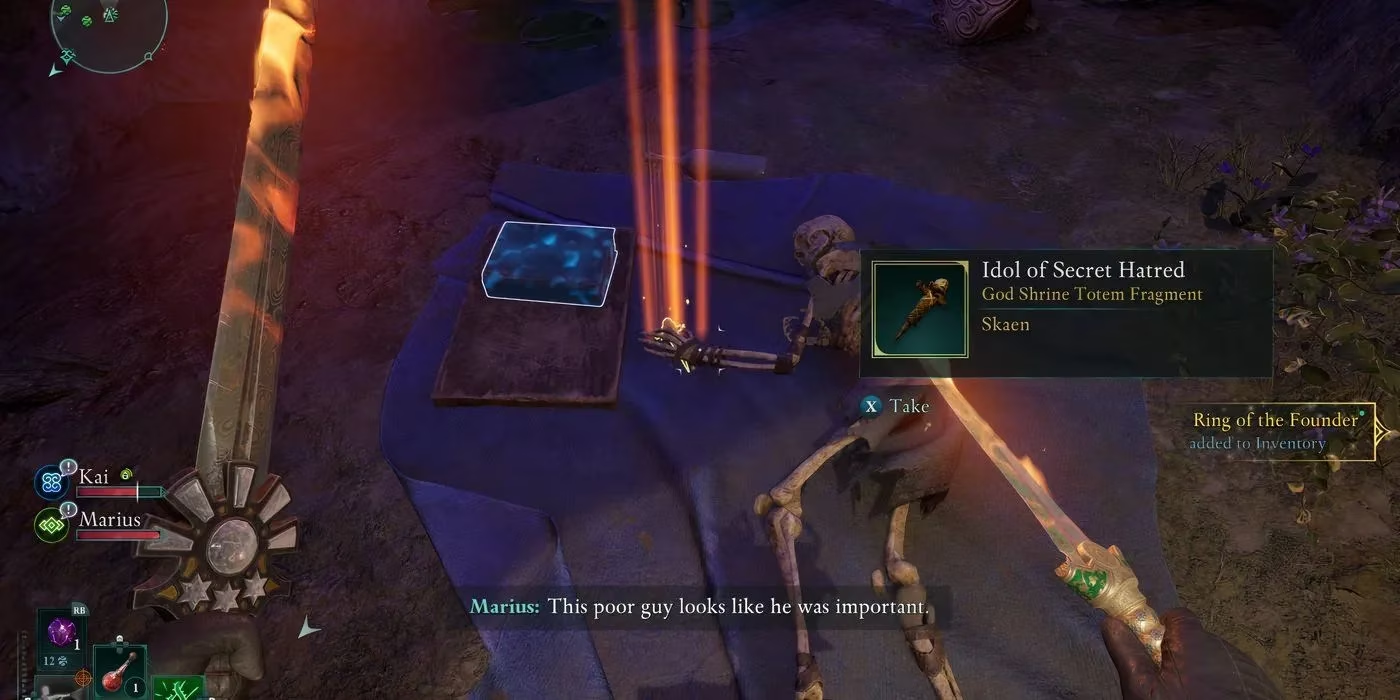
The philosophy of permanence extends deeply into the game's economy and loot systems. Similar to enemies, most items found in the world do not respawn, creating an environment of careful resource management.
General Rule:
-
Loot taken from defeated enemies or found in chests and containers is a one-time acquisition.
-
Returning to a location will not yield the same items again, preventing players from establishing repetitive farming routes for crafting materials or powerful gear.
This "no-respawn" policy for items reinforces the need for thorough exploration. Every decision to sell, dismantle, or use a piece of equipment carries more weight, as there is no guaranteed way to obtain another copy. The game marks your victories and explorations literally; vanquished foes leave behind corpses marked with an 'X' on your map, serving as a testament to your journey but not as renewable resource nodes.
Developer Intent & Player Adaptation in 2026
As players have lived with these systems for over a year since the game's launch, the community's understanding has evolved. Obsidian's design clearly prioritizes a curated, narrative-driven experience over the endless, systemic gameplay loops common in other open-world titles. The intent is to make the world feel "lived-in" and reactive, where clearing a bandit camp or ancient crypt has a tangible, lasting effect on the environment.
This approach has necessitated a shift in player strategy:
-
Exploration is Paramount: To find sufficient resources and challenges, players must venture into every corner of the map.
-
Resource Management is Critical: Decisions about using consumables, selling unique artifacts, or investing in crafting must be made judiciously.
-
Quest Completion is Encouraged: With finite combat encounters, the game's substantial quest lines and narrative content become the primary drivers of engagement in the later stages.
While some players initially lamented the inability to farm for perfect gear, many have come to appreciate the unique pacing and sense of accomplishment Avowed offers. The world may grow quieter as threats are eliminated, but that silence itself tells the story of a protagonist whose legacy is permanently etched into the very landscape. In an industry often filled with infinitely respawning hordes, Avowed's commitment to a finite, conquerable world remains one of its most distinctive and discussed features as we move through 2026.