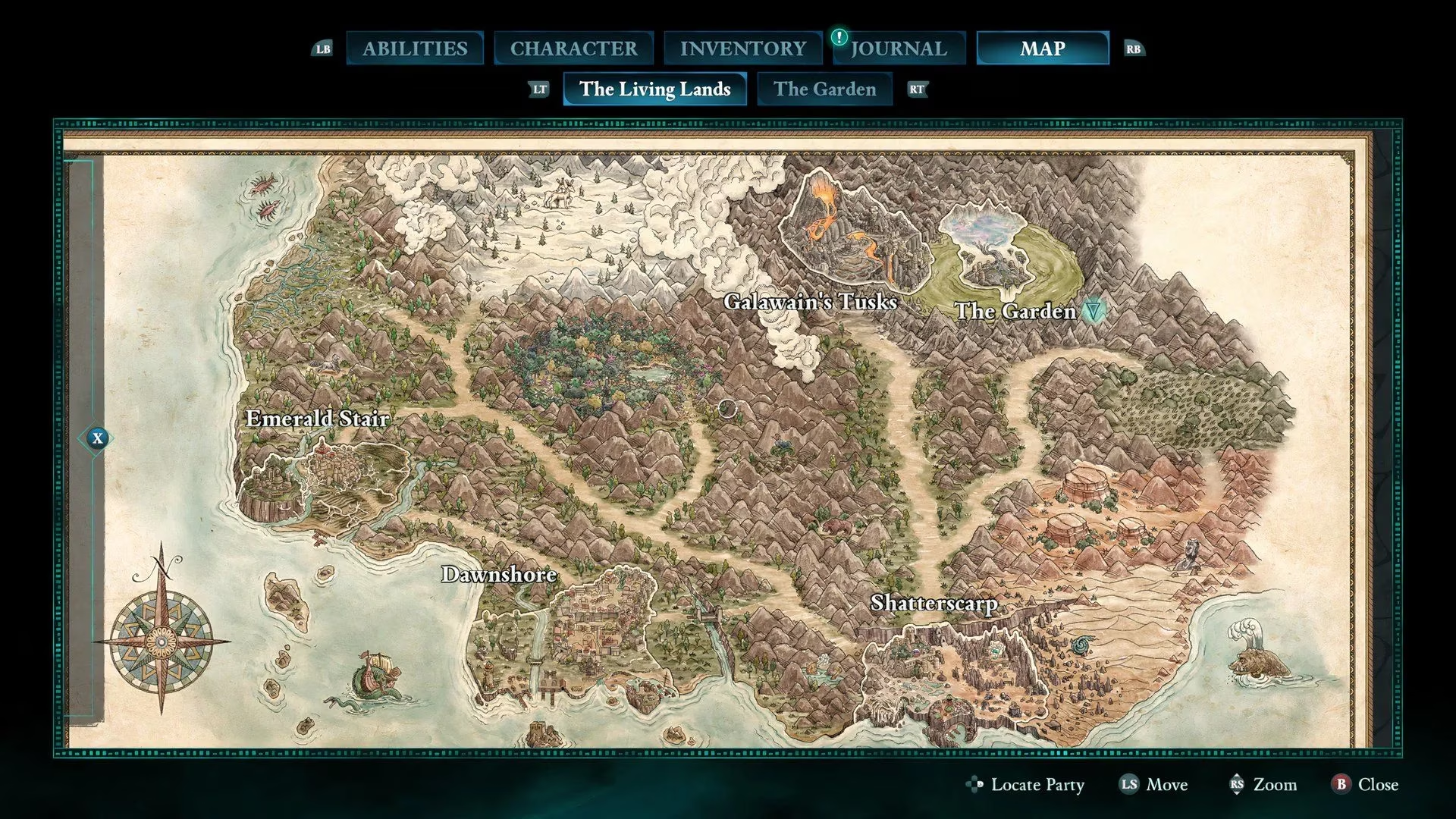
For players who have delved deep into the world of Avowed, a curious phenomenon becomes apparent upon viewing the game's overworld map. The substantial 50-hour journey, encompassing nearly all quests, companions, and secrets, unfolds across just five distinct regions. These areas are all clustered around the edges of a much larger, detailed world map, leaving vast swathes of tantalizing terrain conspicuously unexplored. This design choice creates a peculiar dissonance: while the game itself feels substantial and well-paced, its cartographic presentation inadvertently suggests a truncated experience, as if a more complete version exists just out of reach.
Avowed’s World Map Feels Incomplete
The world map itself is a source of frustration for many explorers. It is not a minimalist tool but a sprawling, detailed painting of the Living Lands. Players can clearly see regions they will never set foot in during the core campaign. Notable absences include:
-
An icy tundra in the northwest corner.
-
A lush, central oasis with a prominent lake.
-
Three massive rock formations far to the east of the Shatterscarp region.
-
An archipelago, wild grasslands, and numerous winding paths.
The game never directs players toward these locations. This design makes the explored areas feel like small, highlighted sections on a tourist brochure for a continent you're only allowed to skim. It fosters a sense that someone else—perhaps a player who paid for a premium edition—is enjoying an IMAX version of the adventure, complete with vistas trimmed from the standard experience. The question naturally arises: why include such detailed, inviting geography if it serves only as decorative framing?
The Quality of Explored Regions Amplifies the Issue
Paradoxically, the strength of Avowed's design makes the unused map space more glaring. The game does an excellent job of ensuring its primary biomes—ancient cities, enchanted forests, and arid deserts—feel visually distinct and cohesive within their own contexts. This is no small feat in a fantasy RPG. However, the loading screens often tease more color and intrigue than some in-game locales, which only amplifies the curiosity about what lies in those blank spaces on the map.
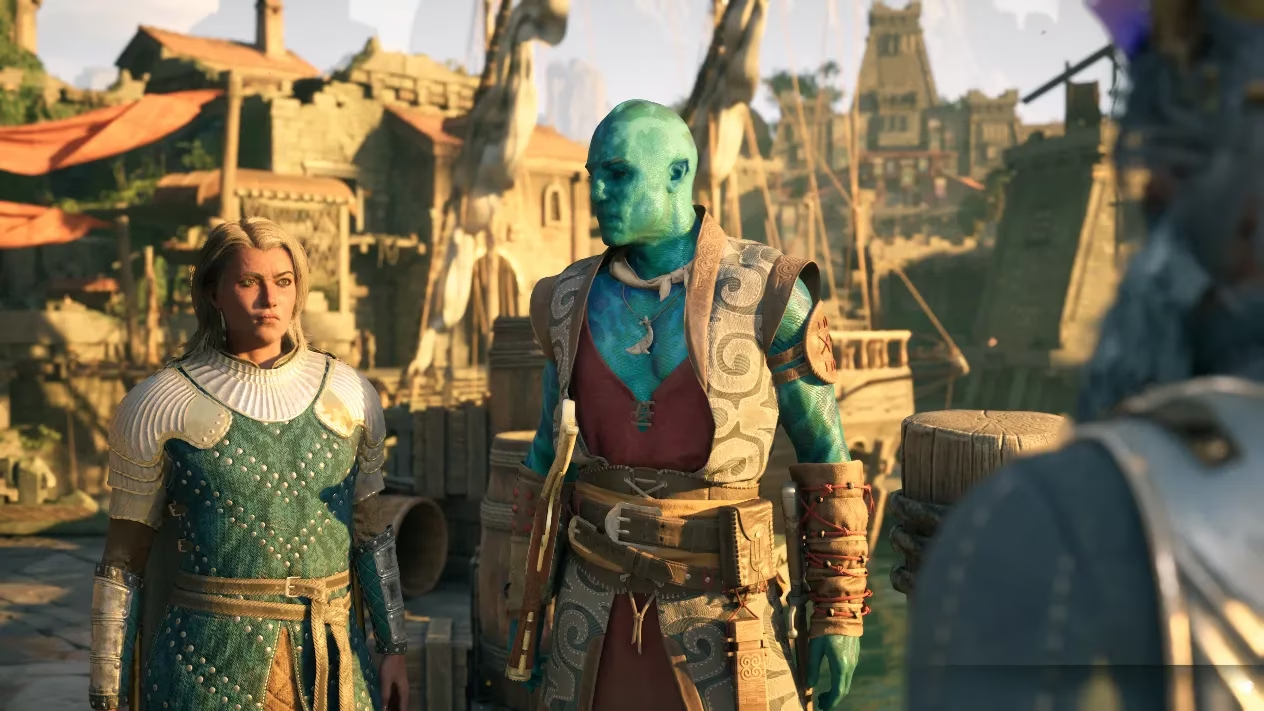
The game briefly flirts with one absent biome: a snowy environment. During a portal sequence with the companion Yatzli, players traverse a linear, frosty path for less than two minutes, long enough to grab a unique spear before moving on. Crucially, this isn't even the snowy region marked on the world map; it's a micro-climate within the desert of Shatterscarp. This tease feels like a remnant of a larger, cut area or, more cynically, content reserved for future monetization.
Speculation on Cut Content and Future DLC
The community's prevailing theory is that these unused map regions are earmarked for future downloadable content (DLC). If true, this represents a risky strategy for Obsidian Entertainment. While a post-launch roadmap is standard practice, visually showcasing locked-off areas on the main game's map can leave a sour taste. It creates a perception, whether accurate or not, that content was snipped from the finished product to be sold back to players later.
This approach has backfired for other games in the past. Players are still waiting for promised content like the quarian ark in Mass Effect: Andromeda or iconic characters announced for MultiVersus. Avowed launched in 2025 to a generally warm reception and benefits from broad accessibility via subscription services. However, banking on future content to complete the world shown on the map is a gamble with player goodwill.
Conclusion: A Map at Odds with the Game Itself
In summary, Avowed presents a fascinating case study in game world presentation. The criticism of its overworld map is, admittedly, a nitpick when considering the quality of the actual playable spaces. Those areas are well-designed, dense with activity, and provide a satisfying Goldilocks-scale adventure—big, but not overwhelmingly so.
Yet, the psychological impact of the map is significant. By framing the journey within so much unused space, it inadvertently makes the Living Lands feel less grand and less believable. It replaces wonder with a faint sense of exclusion. The final verdict is clear: Avowed's actual game maps are good. But Avowed's overworld map is a problematic piece of design that undermines the very world it seeks to portray. For a game about exploration and discovery, that is an unfortunate flaw in an otherwise solid experience. 😕
| Aspect | Assessment | Impact on Player |
|---|---|---|
| Gameplay Length & Density | Substantial (~50 hours), well-paced. | Feels satisfying and complete. |
| Visual Design of Playable Areas | Excellent, with distinct biomes. | Enhances immersion and regional identity. |
| Overworld Map Design | Shows large, detailed, unexplored regions. | Creates a sense of missing out and incompleteness. |
| Speculation on Unused Areas | Likely reserved for DLC or cut content. | Risks player frustration and distrust. |