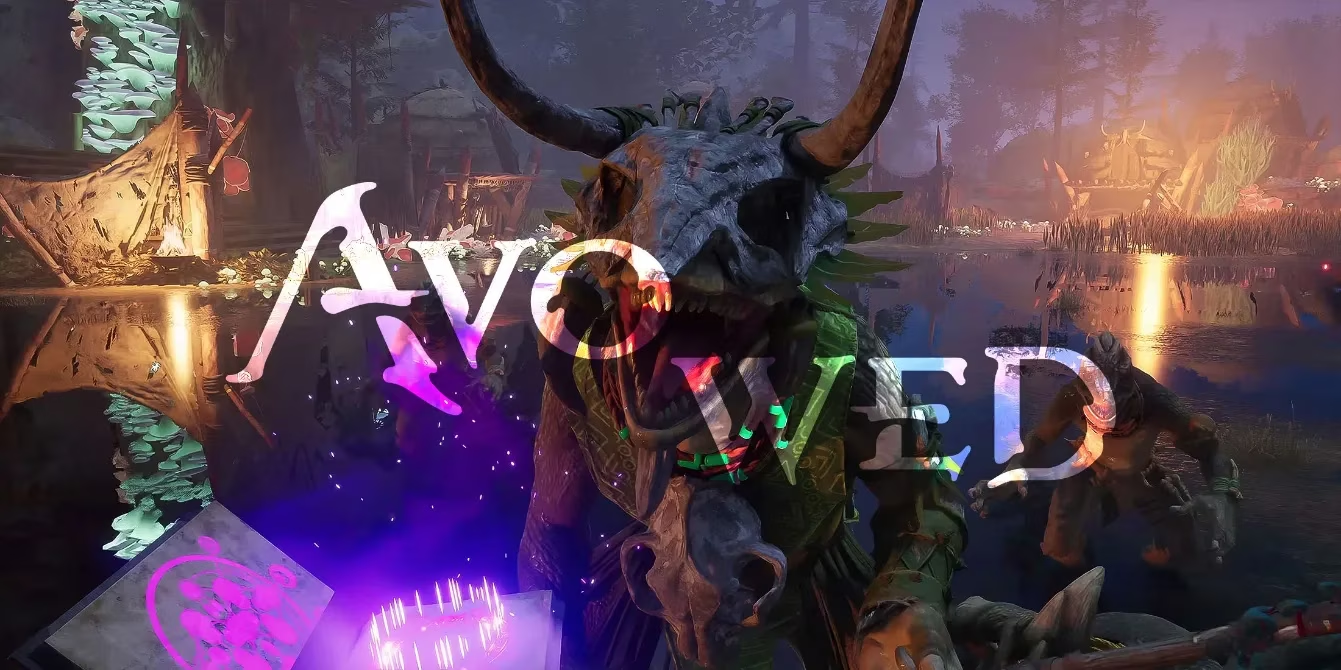
Avowed, Obsidian's latest foray into the RPG genre, has captured the gaming community's attention since its debut. 🎮 Emerging from a sea of high expectations, the game largely delivers on its promises, carving out a distinct identity. However, beneath its polished surface lies a core design philosophy that presents a fascinating paradox. The game's commitment to a fixed enemy population—where defeated foes are permanently removed from the Living Lands—creates a profound sense of player impact but simultaneously clashes with other ambitious systems, creating a unique tension at the heart of the experience.
🛡️ The Immersive Power of a Changing World
Avowed's most defining mechanic is its permanent enemy removal. This isn't just a minor feature; it's a foundational pillar that reshapes the entire player journey. Unlike countless other RPGs where enemies respawn ad infinitum, Avowed's world is persistently altered by your actions. Clearing a cavern of spectral horrors or purging a forest of corrupted beasts has lasting consequences. This design fosters an unparalleled level of immersion:
-
Tangible Progression: Players feel a genuine sense of accomplishment and territorial control. The once-dangerous path to an ancient ruin becomes a safe route for future travels.
-
Narrative Weight: The spreading Dreamscourge is treated as a real, manageable threat. Your victories directly contribute to reclaiming the land, making the central conflict feel immediate and personal.
-
Streamlined Exploration: Need to backtrack for a missed lore tome or hidden treasure? You can traverse previously cleared areas without the chore of repetitive combat, allowing focus on environmental storytelling and discovery.
This system makes the Living Lands feel like a reactive ecosystem, not just a static playground. Your hero's legend is written not only in quest logs but in the newly peaceful glades and silent ruins left in your wake. ✨
⚔️ The Unintended Consequence: Curbing Creative Potential
However, this immersive strength transforms into a significant constraint when it intersects with Avowed's other crowning achievement: its deep and flexible character-building system. The game boasts diverse skill trees encompassing magic, martial prowess, and stealth, encouraging players to craft hybrid, versatile builds. The potential for a lightning-charged warrior or an illusionist-rogue is immense... but often remains just that—potential.
Here’s where the fixed population becomes a double-edged sword:
| System | Promise | Conflict with Fixed Enemies |
|---|---|---|
| Skill & Build Diversity | Encourages experimentation with ability combinations. | Limited skill points by the end of the main story curtail full build realization. |
| Player Agency | Freedom to create a unique playstyle. | No ability to "farm" experience from respawning enemies to acquire more points. |
| Endgame Content | Motivation to perfect a character. | Lack of a New Game Plus mode exacerbates the finite resource (enemies/XP) issue. |
By the time a player completes the central narrative and most side content, they've likely only begun to unlock the true synergy of the skill system. In a typical RPG, one might revisit old haunts to grind for that last crucial ability point. Avowed's design deliberately blocks this path. The very enemies that served as your proving grounds are gone, and with them, the primary source of experience.
The absence of a New Game Plus mode in 2026 feels like a missed opportunity to mitigate this. A NG+ could have allowed players to restart their journey with a developed character, facing renewed challenges in a repopulated world, thus satisfying both immersion and progression cravings. Furthermore, the game's point of no return in the late story, combined with no enemy respawns, can leave completionists feeling locked out of unexplored corners unless they reload an old save—a jarring break in immersion the system otherwise cultivates so well.
⚖️ Striking a Balance: Ambition vs. Accessibility
Ultimately, Avowed's fixed enemy population is a bold, philosophically coherent choice that successfully makes players feel like true agents of change. It reinforces the theme of reclaiming a land from corruption. Yet, this purity of vision comes at the cost of player freedom in long-term customization. The game asks you to live with the permanent consequences of your actions, which includes the consequence of a limited pool of experience.
For some, this trade-off is perfect—the world's consistency and the weight of each battle are worth more than endless optimization. For others, especially those who delight in theory-crafting and maxing out builds, it can feel like the game presents a magnificent toolkit but only enough resources to build half the project.
In the current gaming landscape of 2026, Avowed stands out precisely because of these uncompromising decisions. It prioritizes a specific, cohesive feeling—that of a definitive, impactful journey—over limitless replayability in a single save file. It's a reminder that in game design, every strength can be a weakness from another angle, and true innovation often lies in these calculated, debated trade-offs. Obsidian didn't create a flawless machine, but they crafted a memorable, living world that players truly, permanently change—for better, and for the completionist, sometimes for worse. 🤔💎