In the vibrant and ancient world of Eora, a realm previously explored through the isometric lens of Pillars of Eternity, a new perspective has emerged. Avowed, Obsidian Entertainment's ambitious first-person action RPG, transports adventurers directly into the fray, armed not just with classic swords and spells, but with the distinctive crack of early firearms. This is a world where the Envoy can wield an arquebus, a feature that immediately sets it apart from the sword-and-sorcery norms of contemporaries like The Elder Scrolls V: Skyrim. The transition to a first-person viewpoint inherently elevates the importance of these weapons, promising a fresh tactical layer to exploration and combat. Yet, for one player committed to embracing this ranged arsenal, the journey revealed a landscape of thrilling potential marred by significant systemic flaws.
The Sponge That Soaks Up Fun: Endurance Over Challenge
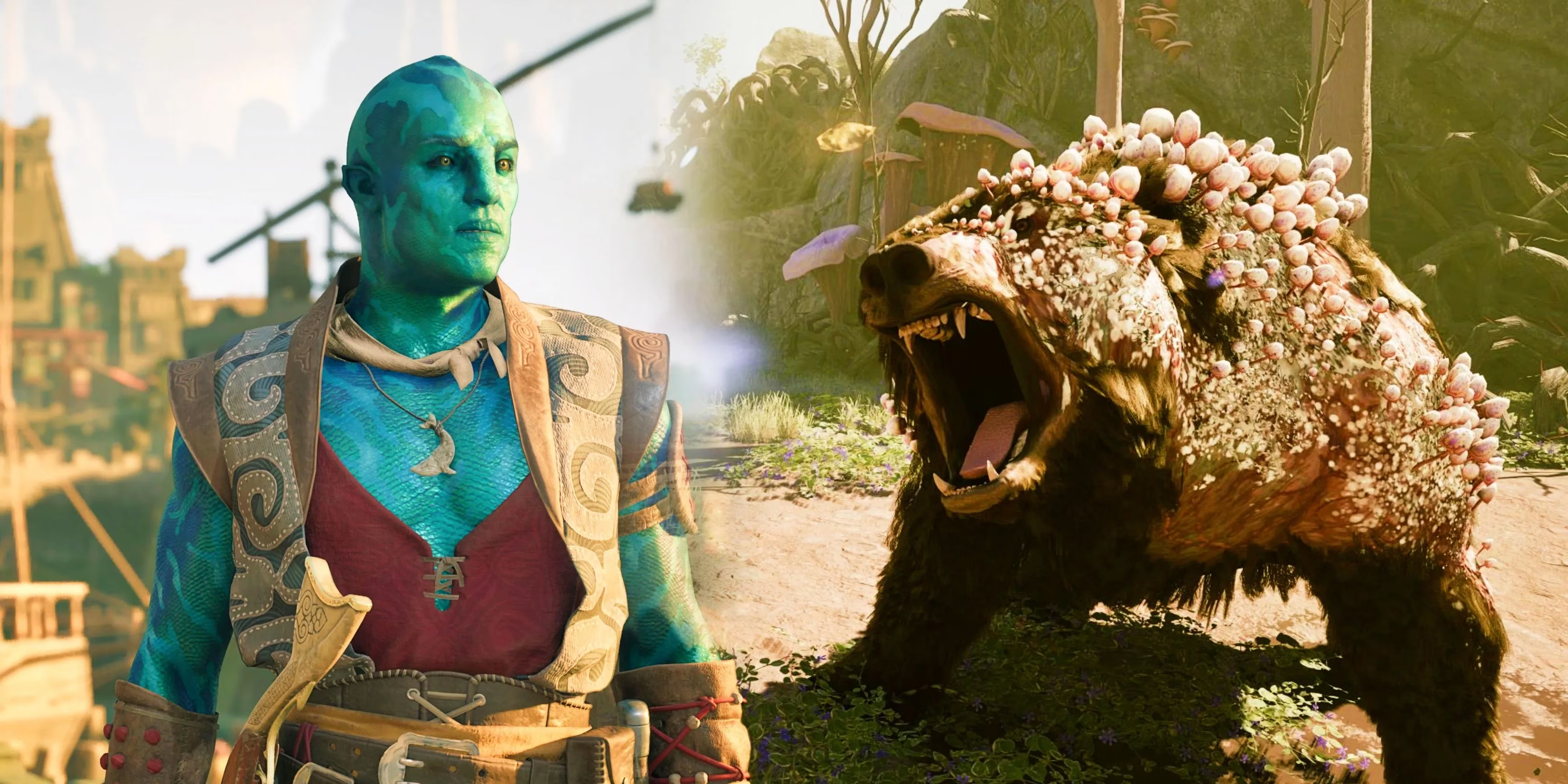
My initial foray into Avowed was defined by a desire to master its unique ballistic offerings. Eschewing the reliable sword and shield, I embraced the life of a marksman, drawn by the romantic notion of flintlock and matchlock warfare blended with classic stealth archery. The primitive nature of the guns wasn't the issue; in fact, the clunky, methodical reload of an arquebus can be incredibly satisfying when it leads to a decisive victory. The core problem, however, lay in the game's approach to difficulty scaling. Playing on Hard initially seemed the right choice for a genuine test of skill, but it soon devolved into a war of attrition. Enemies, from lowly xaurip camps to towering bosses, transformed into veritable bullet sponges, their health pools so vast that skirmishes stretched from minutes into seeming eternities.
Even with the HUD disabled, removing the visual crutch of enemy health bars, a profound sense of miscalculation set in. I would land what felt like a perfect, devastating shot, only to watch the foe shrug it off and continue its advance. This design philosophy actively undermined the fantasy of being a precise, deadly shooter. The thrill of a successful ambush was neutered, as even a stealthy bow shot was rarely enough to eliminate a target before it could raise the alarm. While diligently upgrading weapons could trivialize some encounters, it created a jarring, binary experience: fights were either frustratingly protracted or disappointingly swift, with little middle ground of engaging, efficient combat.
Artificial Un-Intelligence: When Foes Forget How to Fight
The drawn-out nature of ranged combat had a secondary, equally damaging effect: it spotlighted the glaring deficiencies in enemy AI. When engagements are quick, poor pathfinding or erratic behavior can be overlooked. When they last for minutes, every flaw is magnified. Too often, enemies meant to be fearsome adversaries would become confused by simple terrain, getting stuck on geometry or running in circles rather than engaging. Others would inexplicably turn and flee without apparent cause, breaking immersion and any sense of tactical pressure.
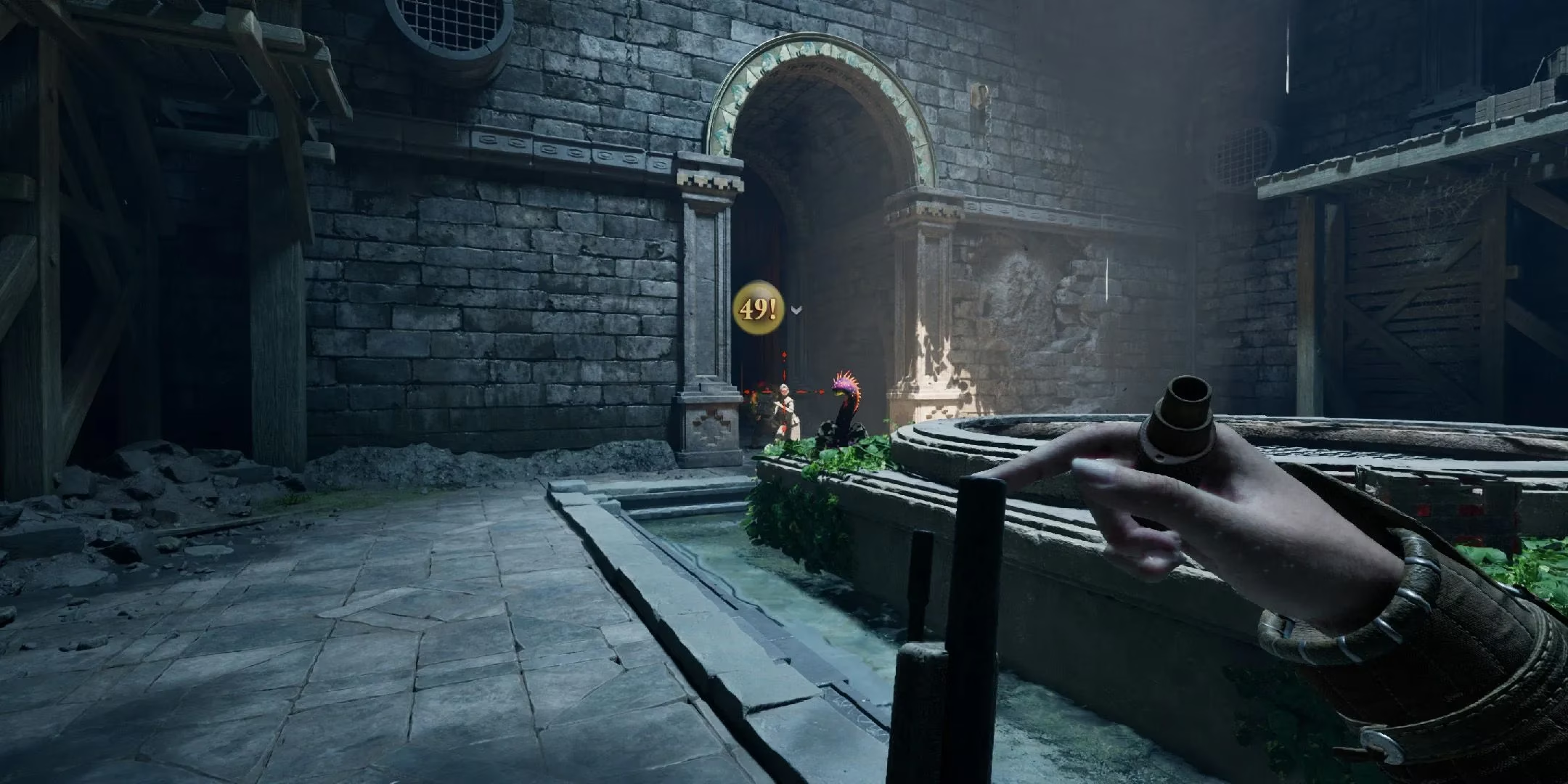
This highlighted a fundamental disconnect. Avowed provides the tools and perspective of a first-person shooter, but it fails to deliver the polished, reactive enemy behaviors that make the genre's combat loop compelling. The game includes clever mechanics, like the Godlike ability to suspend enemies in place, which theoretically supports a ranged playstyle. Yet, the core experience of picking off foes from a distance is frequently undercut by their inability to navigate the world intelligently or present a consistent, challenging threat.
Seeking Salvation in Steel and Skill
Faced with these hurdles, adaptation became necessary. I haven't abandoned ranged combat entirely, but I've shifted tactics. Dual-wielding pistols has proven a more dynamic and engaging approach, allowing me to dive into the thick of battle and minimize the tedious cycle of peek-shoot-reload from behind cover. This hybrid style feels more in tune with Avowed's moment-to-moment flow. Furthermore, as my character has progressed, unlocking new abilities and skill tree perks has begun to open up more viable combat strategies, offering glimpses of the thrilling gunplay that could be.
Another hope for improvement lies in enemy variety. The first major region, Paradis, suffered from a repetitive bestiary. Moving to the stunning vistas of the Emerald Stair brought a welcome influx of new adversaries, but the excitement was too often dampened by the reappearance of familiar, overused foes like spiders and, inexplicably, an overabundance of bears. A richer tapestry of enemies with diverse behaviors and weaknesses would naturally make combat more engaging and strategic, reducing the reliance on sheer enemy durability for challenge.
The Pillars of Potential: A Foundation to Build Upon
Despite its current shortcomings, Avowed is built on a foundation of impressive ideas. The shift to first-person has enabled surprisingly solid platforming and vertical exploration, making the world feel more tangible. Its combat mechanics, with their emphasis on telegraphed attacks and precise timing, carve out a distinct identity separate from Bethesda's RPGs. The game clearly wants you to experiment, pushing players to try every enchanted blade and peculiar firearm they discover.
Post-launch support since its 2025 release has already begun addressing some community concerns, including tweaks to enemy AI. What many players, myself included, yearn for are more nuanced difficulty options. Imagine a setting where enemies hit harder but go down faster, trading tedious endurance for lethal precision. Or one that lessens the severe damage penalty for using under-leveled gear, allowing for more flexible playstyle experimentation without being unfairly punished.
For now, the dream of being a master arquebusier, picking off foes with careful, powerful shots, remains somewhat out of reach in the Living Lands. The gunplay, while unique and atmospherically rich, is often not the most enjoyable path. Yet, Avowed's world is vast and full of other wonders. I've found peace in setting that specific fantasy aside to explore the myriad other opportunities the game provides—delving into its deep lore, experimenting with wild magic, and discovering the stories hidden in every corner of Eora. The guns of Avowed are a bold and distinctive feature, but they are waiting for the rest of the game's systems to evolve and fully support their thunderous potential.
Data referenced from Rock Paper Shotgun helps frame why Avowed’s firearm fantasy can feel at odds with its current tuning: in first-person action RPGs, difficulty that mainly inflates enemy durability tends to expose AI pathing quirks and dull the payoff of careful shots, turning methodical reload-and-reposition loops into repetition rather than tension. In that light, the most satisfying route often becomes shifting toward faster-handling pistols or mixed melee-and-magic setups, where aggressive pacing and ability synergies can better mask spongey health pools and keep encounters from dragging.