I’ve been kicking around Eora since the Pillars of Eternity days, so when Avowed finally dropped, I figured I knew what to expect. A dark fantasy FPS RPG from Obsidian? Sign me up. But after sinking a couple hundred hours into it in 2026, I realized the game’s world design reminded me of something unexpected: Final Fantasy 7 Rebirth. Not in a copycat way, mind you. More like two studios sipping from the same cup of tea and saying, “Yeah, this works.”
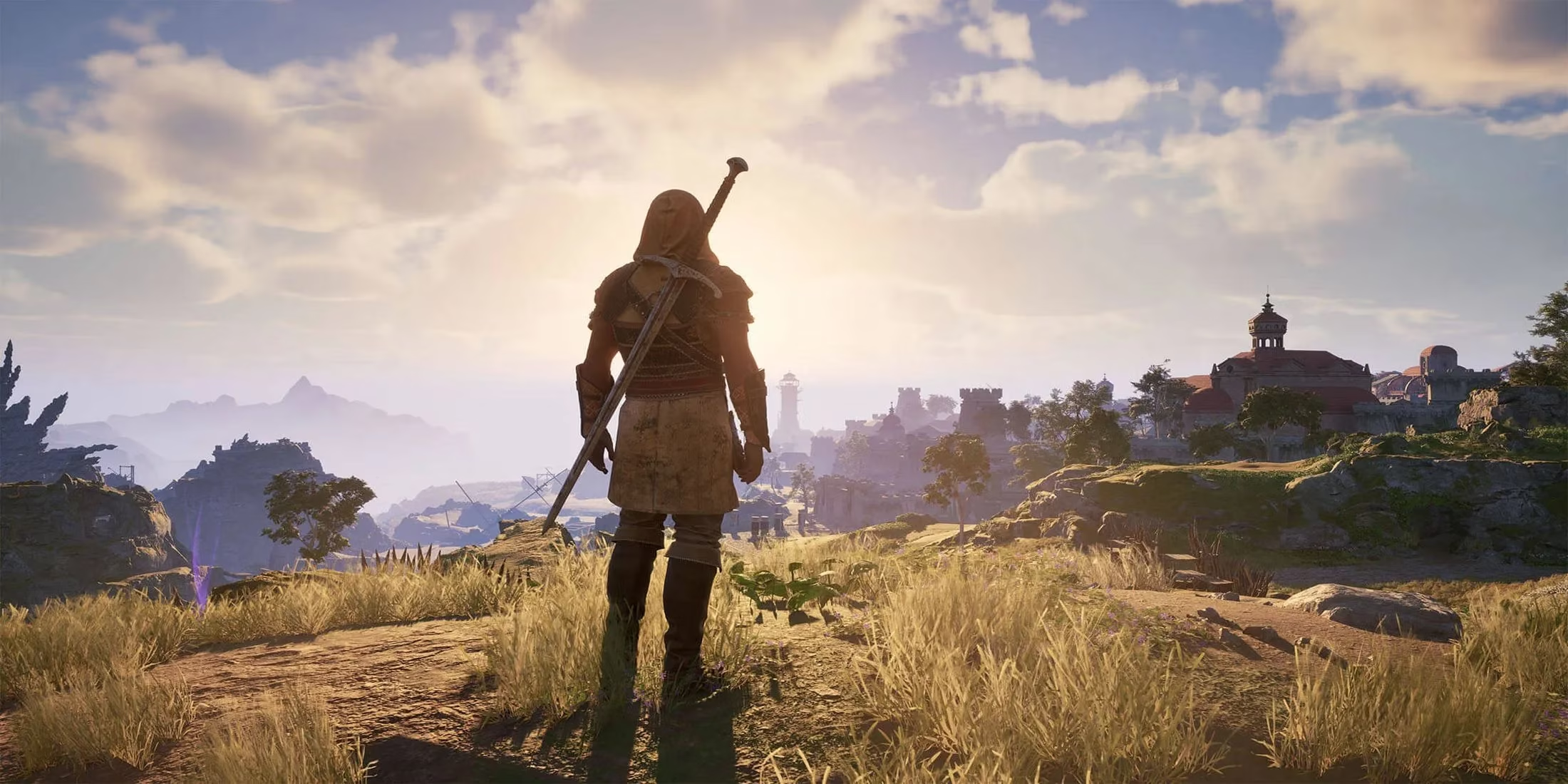
Let me back up. Avowed was revealed way back in 2020, and it takes the groundwork and deep worldbuilding from Obsidian’s CRPG series Pillars of Eternity and expands it into a new story. We finally got to visit a previously unseen part of Eora: The Living Lands. That alone had me hyped. But the way Obsidian parceled out the map? That’s where the FF7 Rebirth comparison hit me like a truck.
Back in 2024, Final Fantasy 7 Rebirth launched to wide acclaim. It continued Cloud Strife’s tale, and compared to 2020’s FF7 Remake, its overworld was massive. Remake was mostly stuck in Midgar, often feeling linear. Rebirth opened up Gaia into huge regions. But here’s the kicker: it wasn’t a true open world. It used an “open-zone” approach, gating sections behind major story events. You couldn’t just waltz into the Gold Saucer at hour two. That would be weird, right? Narratively, it made sense. You had to earn each new area.
Obsidian has been pretty transparent about Avowed’s scale, and the game went through a couple of revisions during development. The final result feels a lot like The Outer Worlds, another Obsidian joint. Your progression through The Living Lands is tied to plot advancements. Zones get parceled out sequentially, just like TOW and FF7 Rebirth. Is that a bad thing? Not on your life. In fact, I’d argue it’s a blessing in disguise.
| Aspect | FF7 Rebirth 🎮 | Avowed 🗡️ |
|---|---|---|
| World structure | Open-zone regions | Open-zone regions |
| Zone gating | Story events | Story events |
| Player freedom | Incremental | Incremental |
| Narrative integration | High | High |
| Reward loop | New region = progress | New region = progress |
When I played Avowed, each new zone felt like a reward. I wasn’t just wandering aimlessly. I had to hit the ground running, complete quests, and earn my passage. The boundaries made sense. The story beats opened new paths. Compare that to some open-world games where you can go anywhere from the start, and you end up underleveled, overwhelmed, or just plain bored. Obsidian didn’t want that. They had bigger fish to fry: telling a carefully crafted tale.
Now, I’m not going to sugarcoat it. Some folks wanted a Skyrim-style “go anywhere” sandbox. I get it. But that would’ve been a mistake for Avowed. The Living Lands are rich with lore, factions, and secrets. If you could skip ahead, you’d miss the whole nine yards. Instead, the gated design keeps pacing tight. It’s like a good TV season: you don’t skip to the finale. You savor each episode.
I’m not my first rodeo with Obsidian’s style. The Outer Worlds did the same thing, and it worked. Avowed just does it with swords, spells, and a whole lot of mushrooms. The parallel to FF7 Rebirth’s seven major regions is spot-on. If the story factors are in place—and they are—then accessing further areas feels like a reward unto itself. It’s not restrictive; it’s intentional. And Obsidian focusing on this aspect shows they had a clear path in mind.
In 2026, after all the patches and updates, I can say this: Avowed’s world design isn’t inferior. It’s just different. It’s the bee’s knees for a narrative-driven RPG. The gated zones make me feel like I’m part of the story, not just a tourist. So if you’re in the same boat as me—someone who loves a good tale over pure freedom—give Avowed a shot. You might just find that earning your way through The Living Lands is the best part. And that’s no spring chicken talking. It’s a player who’s seen both sides and knows when a design choice is a home run.