I’ve been neck-deep in Obsidian’s Avowed since launch, and I’ve got to say—the way they handle class design is incredibly refreshing. If you’re just jumping in now, you’re in for a treat. The game doesn’t lock you into a rigid archetype. Instead, it hands you three distinct ability trees and basically says, “Go wild, mix and match, find your own rhythm.” Over the last year, I’ve tinkered with pure builds, wild multiclass hybrids, and everything in between, so let me walk you through exactly how these trees work and how to craft something that feels uniquely yours.
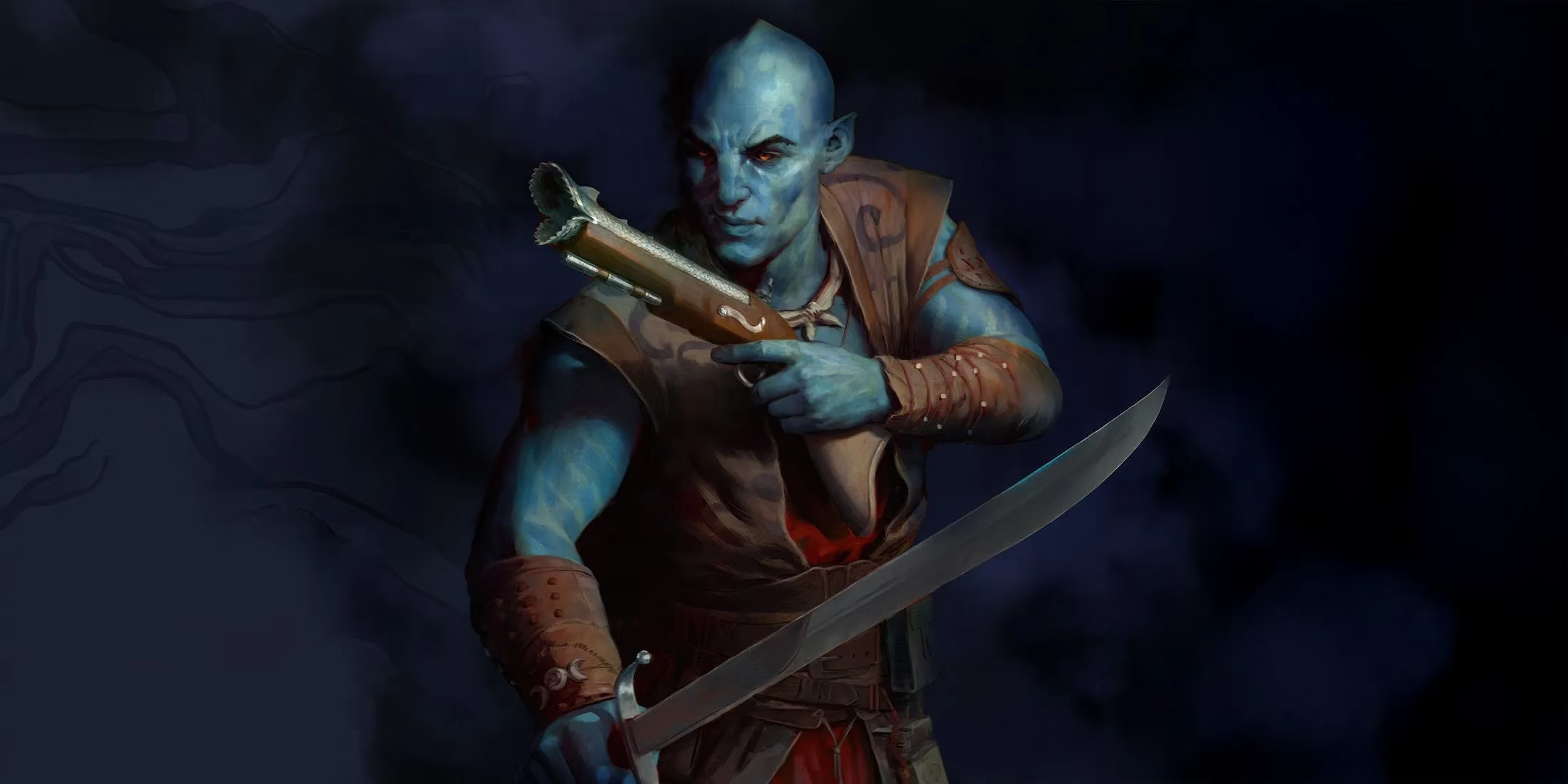
Right from the character creation screen, Avowed nudges you toward a playstyle without ever boxing you in. You’ve got three ability trees: Fighter, Ranger, and Wizard. Each one captures a classic fantasy vibe but adds enough depth to keep things spicy even after dozens of hours. And the best part? Your background choice gives you a small head start, but it never restricts which trees you can dip into later.
The Fighter Tree: Overwhelming Combat Force ⚔️
This tree is all about standing your ground and hitting like a freight train. Fighter abilities revolve around close-range, high-impact melee combat, stamina management, and blocking. If you love the feeling of a perfectly timed shield bash or cleaving through a crowd with a greatsword, this is your jam.
Key highlights of the Fighter tree include:
-
Melee weapon specializations that amp up damage and unlock powerful charged attacks
-
Stamina and movement buffs so you can stay mobile even in heavy armor
-
Block improvements that turn you into an immovable object on the battlefield
Starting out as a pure Fighter? Pick the War Hero background. It bumps your Might and Resolve both to 3, giving you a genuine edge in raw damage output and stamina regen right from the tutorial. You’ll notice the difference immediately when you’re trading blows with early bandits.
The Ranger Tree: Agility and Finesse 🏹
Where the Fighter is a sledgehammer, the Ranger is a stiletto. This tree emphasizes mid-to-long-range attacks, lightning-fast movements, and a hit-and-run mentality. You won’t be facetanking anything here; instead, you’ll be dancing around enemies, popping off arrows or slinging a spear, then rolling out of danger before they can blink.
Ranger abilities give you:
-
Enhanced bow and one-handed weapon techniques
-
Stealth and evasion tools that make you harder to pin down
-
Tricks that reward you for bouncing between ranged and melee seamlessly
The Vanguard Scout background is your ideal starting point. It sets Perception at 3 and boosts both Constitution and Dexterity to 2. A word of warning, though: you won’t start with a bow in your hands. You’ll need to scrounge one up in the opening areas, but trust me, it’s worth the brief scramble.
The Wizard Tree: Arcane Mastery 🔮
Now, if you’d rather unravel reality with a snap of your fingers, the Wizard tree is your playground. It’s packed with offensive spells, defensive wards, elemental chaos, and passives that enhance your skill with wands and grimoires. Pure spellcasting builds can feel squishy, but the sheer destructive potential more than makes up for it.
A super important detail: every Grimoire you equip grants a fixed set of spells you can cast. But if you learn a spell from the Wizard tree, you can cast it without needing its associated Grimoire. And here’s the clever bit—if you cast the Grimoire version of a spell you’ve already learned, it fires off at one level higher than normal. That means experienced spellcasters get a constant power bump.
To climb the Wizard tree and unlock higher-tier spells, you’ll need to invest ranks into the Grimoire Mastery passive. Each rank opens up new spells and effects on the right side of the tree, and without enough mastery, you won’t even be able to use higher-level Grimoires you find in the wild.
For an immediate spike in magical prowess, choose the Court Sorcerer background. This pumps Perception and Intellect to 3, which directly improves your spell damage and effective range. You won’t get a Grimoire or wand right away—like the Ranger’s bow, you’ll find them early in the tutorial—but by the time you hit the first open zone, you’ll already feel comfortable flinging fireballs.
Starting Builds at a Glance
Here’s a quick overview to help you decide at character creation:
| Playstyle | Recommended Background | Key Attributes Boosted | Starting Gear Note |
|---|---|---|---|
| Fighter | War Hero | Might 3, Resolve 3 | Begins with heavy melee weapon and shield |
| Ranger | Vanguard Scout | Perception 3, Constitution 2, Dexterity 2 | No bow initially; acquire one early |
| Wizard | Court Sorcerer | Perception 3, Intellect 3 | No Grimoire or Wand initially; found in tutorial |
Why You Should Absolutely Multiclass 🌀
Now for the juicy part. Avowed’s class ability trees are not exclusive—your background has zero effect on which skills you can buy. That means you can, and probably should, dabble in multiple trees. Even a pure archetype fanatic (like me, who usually sticks to one fantasy) will find massive benefits in grabbing a few off-role skills.
Here’s why multiclassing shines:
-
Pure Wizards gain survivability: Wizards are glass cannons. But if you dip into the Fighter tree to reduce heavy armor penalties, you can slap on some serious protective gear without turning into a sluggish liability.
-
Rangers love crowd control: A pure Ranger can pick up a few Wizard spells for freezing or rooting enemies, creating safe windows to unload damage from a distance.
-
Fighters crave AoE and buffs: A Fighter with even one or two Wizard buffs becomes a terrifying frontliner—imagine a charging knight wreathed in lightning.
-
Hybrid builds like the Spellblade: Splitting points between Fighter and Wizard lets you carve through enemies with an enchanted blade while weaving spells mid-combo. It’s incredibly stylish and devastating.
There are no class restrictions here—just level requirements and, for higher Wizard spells, the necessary Grimoire Mastery. So go nuts. Experiment. The game laughs at the idea of “class purity.” And if you ever feel like you’ve spread yourself too thin, or your hybrid dream isn’t pulling its weight, remember that you can always re-spec any ability tree by spending some gold. Respeccing is cheap, fast, and completely judgment-free.
My Personal Advice After a Year of Playing
In 2026, I’ve seen the meta shift half a dozen times, but the real magic of Avowed is that no single build dominates forever. What works best often comes down to how you like to move through the world. I’ve had runs where I started as a Vanguard Scout, picked up some Fighter passives for survivability, and ended up as a shockingly durable archer. In another playthrough, I went full Court Sorcerer, splashed into Ranger for the evasion tools, and became an untouchable chaos mage zipping around with a one-handed sword.
Don’t sleep on the power of mixing in just 2–3 points from another tree early. The difference between a struggling specialist and a versatile powerhouse often boils down to that one handy ability you swiped from a tree you thought you’d ignore.
And shoutout to companions like Kai—while they don’t directly change your class build, having a solid frontline companion can free you up to be even more creative. A squishy caster suddenly feels viable when a loyal fighter buddy is eating all the aggro.
So, whether you’re stepping into the Living Lands for the first time or just looking to shake up your current playthrough, go in with the mindset that your “class” is just a starting point. Avowed wants you to scribble outside the lines, and honestly, that’s where the real fun begins.