In the year 2026, a player steps into the Living Lands of Avowed, a world crafted by Obsidian that feels both intimately familiar and wondrously new. From the moment they set foot in Paradis, a sense of curated discovery takes hold. This is not a realm of overwhelming vastness for its own sake, but a landscape sculpted with intention, where every winding path and tucked-away cavern whispers of secrets waiting to be found. The balance is delicate, a dance between grand scale and meticulous density, ensuring that curiosity is the constant companion on this journey. While the central narrative may unfold with a measured pace, the true soul of the adventure lies in the detours, in the choice to follow a hunch or a haunting melody drifting from a moss-covered ruin rather than the call of destiny.
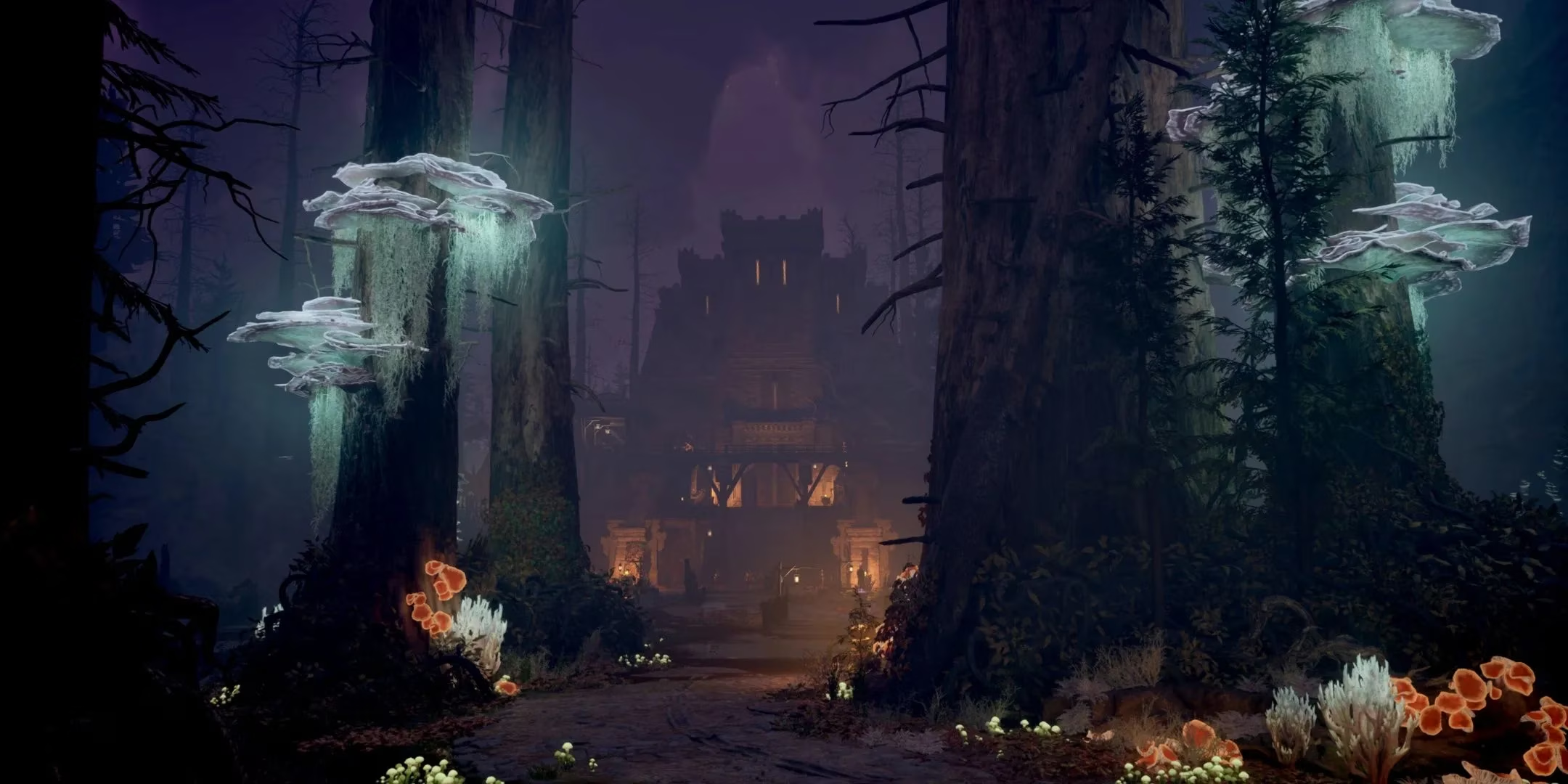
The spirit of timeless exploration, the kind that defined eras of role-playing, breathes deeply within Avowed. It evokes memories of creeping through the countless caves of Skyrim—not the grandiose dwarven cities, but the humble, personal grottos burrowed into hillsides. They were spaces of pure, undiluted adventure: a brief skirmish with frostbite spiders, the gleam of a soul gem in the dark, the satisfaction of emerging, slightly richer, into the pale northern light. Avowed understands this magic. It populates its world with such beautiful distractions, smaller locations that promise a quick foray but often deliver so much more. An early expedition into a forgotten ruin, ostensibly to retrieve a relic for a lost legion, transforms in mere moments. The air thickens with consequence as the player stands before an ancient power, faced not with simple looting, but with a choice that echoes through the ages: to resurrect a slumbering god or silence its prophet forever. These are the moments that define a personal legend, born not from epic proclamations, but from a simple decision to turn left instead of right.
This philosophy of meaningful discovery extends to every corner. Even when a delve into a sunken temple or a bandit outpost does not unravel a world-shaking thread, it remains profoundly worthwhile. Each location is a self-contained story, a vignette told through environmental whispers, a unique enemy encounter, or a piece of lore tucked into a skeletal hand. They are the seeds of water-cooler tales, the personal anecdotes that make one player's journey through the Living Lands distinct from another's. The brilliance lies in the guarantee of a reward, not always in gold or experience, but in the sheer joy of the act of finding. The combat, crisp and responsive, becomes a rhythmic punctuation to exploration. Defeating a cluster of spectral guardians to claim a chest that holds not a legendary artifact, but a journal detailing a tragic love story, feels just as significant. The value is in the memory forged, the small story witnessed.
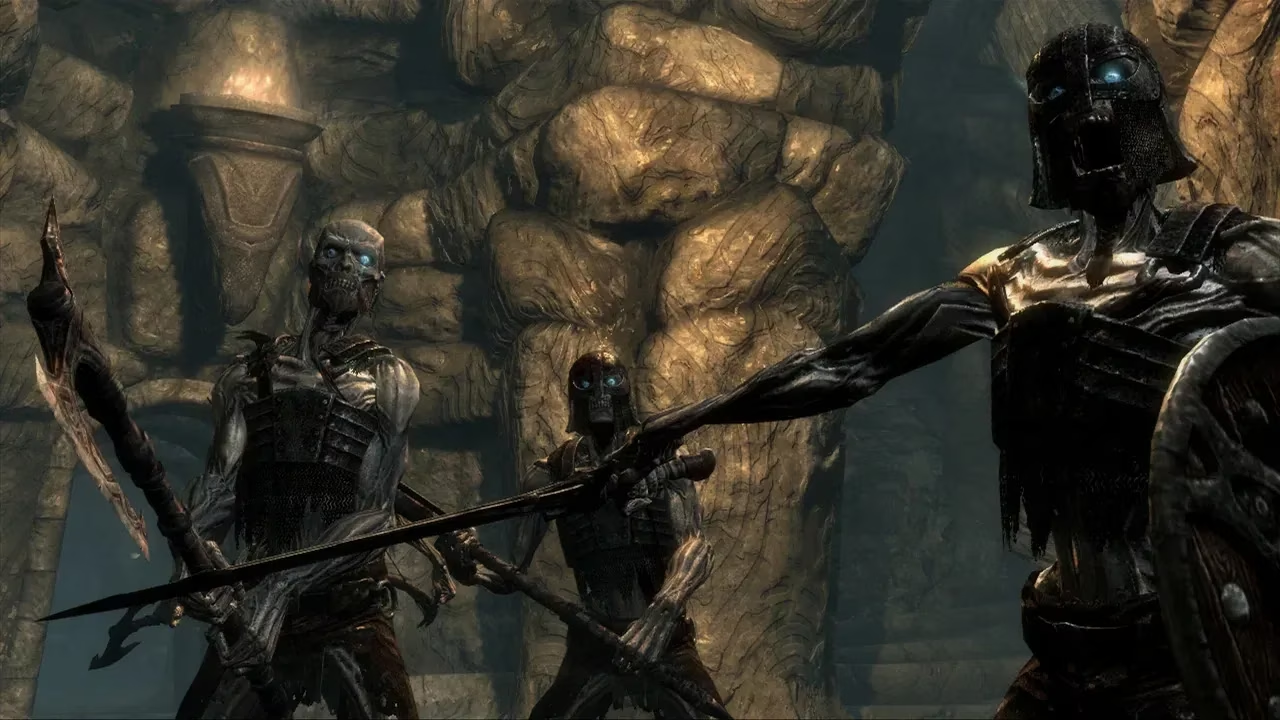
Beyond the threshold of instanced dungeons, the open spaces of Avowed itself are designed with a vertical poetry. This is not a flat, sprawling plain demanding endless horseback rides between points of interest. It is a world built in layers, inviting the eye and the body upwards. Stone outcroppings become stairways, ancient tree roots form natural ladders, and crumbling architecture offers precarious pathways to hidden ledges. The design encourages a parkour of the imagination, a constant scanning of the environment not just for threats, but for opportunities—a crack in the wall, a climbable vine, a distant glint on a plateau. The world is walkable, yes, but more importantly, it is climbable, searchable, and intimately knowable. Every valley feels deliberate, every forest grove holds potential, ensuring that the journey between major story beats is never a barren transit, but a continuous chain of micro-discoveries.
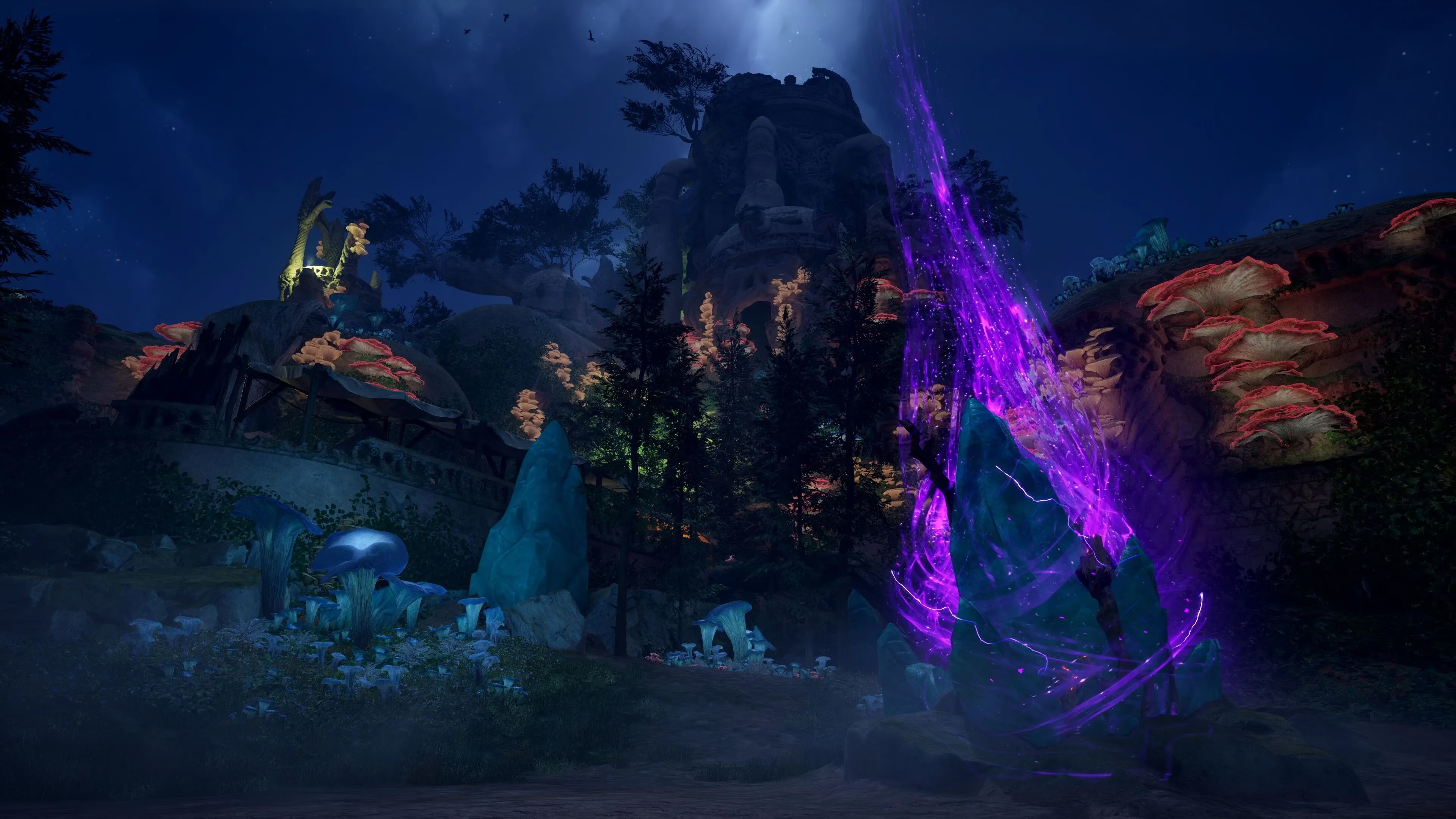
In an age where RPGs often compete on a scale of cinematic grandeur or systemic complexity, Avowed carves its own niche with quiet confidence. It does not seek to be a Baldur's Gate 3, a titan of branching narrative and player agency. Instead, it aspires to be a masterclass in atmospheric exploration and tactile satisfaction. The core loop is a meditative, rewarding rhythm: enter a space, engage its challenges, uncover its secrets, and emerge back into the world, changed not just by inventory, but by experience. The path often curls back on itself in elegant loops, a satisfying geometric closure to a small adventure before the horizon calls again. It is a game that respects the player's time not by eliminating travel, but by making every step of the travel engaging.
The companions one meets, like the intriguingly described 'hunky fish Garrus', become fellow wanderers in this philosophy. Their stories are discovered not in lengthy exposition dumps at camp, but in comments made while peering into a dark tunnel or in reactions to the moral choices made in those 'small' dungeons. The narrative is environmental, emergent, and personal. It is a game that understands the simple, profound pleasure of getting gloriously, purposefully lost. To spend an afternoon not furthering the main quest, but methodically clearing a coastline of sirens, simply because they were there and their song was irritating, is presented as a perfectly valid way to shape your legacy.
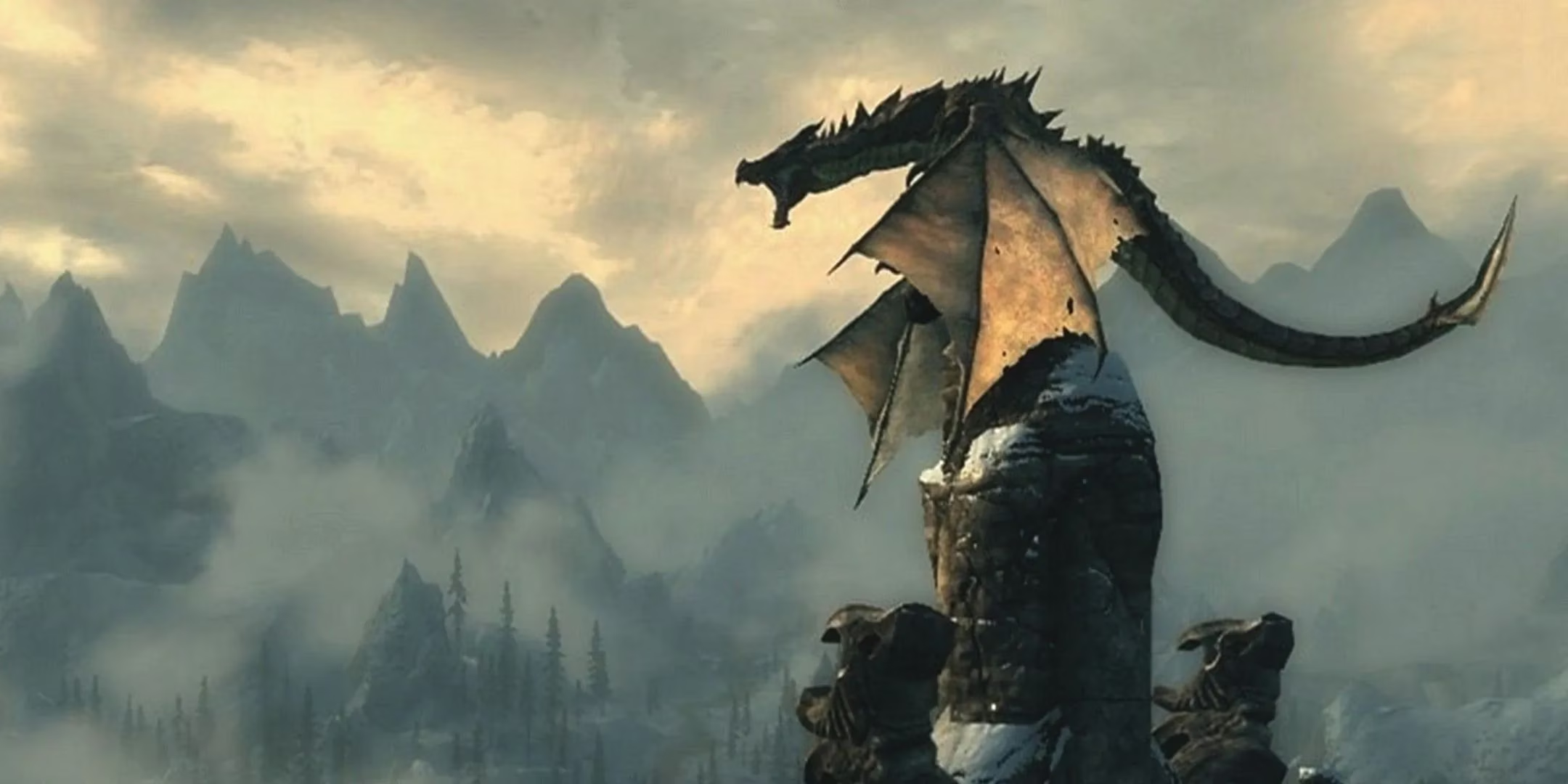
As the journey through the Living Lands continues, the promise remains: around any corner, within any cave mouth shrouded in mist, a story waits. It might be a grand tale that shifts the fate of kingdoms, or it might be a small, sad tale etched on a tomb. In Avowed, both are given equal weight, equal dignity. The world is a cabinet of curiosities, and the player is the collector, deciding which stories to pick up, examine, and carry forward. In 2026, where open worlds can sometimes feel like exhausting chores, Avowed feels like a gift—a reminder that the greatest adventures are often the ones we stumble into by chance, armed with nothing but curiosity and a willingness to see what's behind the next beautifully rendered, moss-covered wall. It is a poetic ode to the joy of getting sidetracked, where the destination is always secondary to the wonder of the path itself.